How LEGO® Serious Play Helps Teams Have Better Strategic Conversations
“The greatest problem with communication is the illusion that it has been accomplished.”
Have you ever left a team meeting feeling like you covered a lot of ground but somehow didn't get anywhere?
The room was full. The conversation was active. The whiteboard filled up with notes.
But when the meeting ended, you walked away with the quiet sense that the real conversation — the one your team actually needed to have — never quite happened.
The two loudest people took most of the time.
A few quieter voices stayed quiet.
Someone brought up the hard question but no one followed it.
And by the end, you had agreement on the surface without alignment underneath.
Most teams know this feeling.
It's not that anyone did anything wrong. It's that traditional strategic conversations rely almost entirely on words — and words alone often can't carry the weight of what a team needs to work through together.
QUICK GUT CHECKThink back to your team's last strategic meeting. Did the same two or three people do most of the talking? Did the hardest question get named — or just circled? Did you leave with real alignment, or the appearance of it?
If any of those land, keep reading.LEGO® Serious Play offers a different path.
I use LEGO® Serious Play as a structured facilitation method where team members build physical models to explore ideas, surface assumptions, and align around a shared direction.
It may sound unlikely on paper — a room full of professionals working through strategy with plastic bricks — but the research behind it is deep. A 2025 randomized control trial published in the Journal of Work-Applied Management found that teams receiving LSP-based coaching interventions showed greater gains in psychological safety and team cohesion than teams receiving standard facilitation. When the method fits what a team is working through, it can move conversations forward that ordinary meetings keep circling.
As a leadership coach and team facilitator based in the St. Louis metro area, I've come to see LEGO® Serious Play as one of the most powerful methods I know for one specific challenge: helping teams have more strategic conversations for the priority topics they need to dig deeper into. My work draws on six team and individual assessment frameworks — LEGO® Serious Play, Working Genius, CliftonStrengths, EQ-i 2.0, MBTI, and the Enneagram — layered together to match what each team actually needs.
In this post, I'll walk through how LEGO® Serious Play works, six ways it improves team conversations, and when it's the right fit for your team

Why Strategic Conversations Get Stuck
Why do those high priority team conversations so often stall?
Strategic conversations are hard for reasons that have nothing to do with the intelligence or good faith of the people in the room. As Harvard Business School professor Amy Edmondson has documented in her research on psychological safety, even well-intentioned teams struggle when the medium of the meeting itself works against candor and equal participation.
A few patterns show up over and over:
Talk-time follows a predictable curve. In most meetings, two or three people generate the majority of the verbal content. The rest contribute less. It isn't about capability — it's about how the medium of pure conversation rewards a specific style of thinking-out-loud that not everyone shares.
Complex ideas resist words. When a team is trying to work through something layered — how they want to approach a strategic shift, what their real priorities should be, how they navigate a difficult team dynamic — putting the whole picture into linear sentences is genuinely hard. Important nuance gets flattened. Whoever articulates the loudest version of the idea often has more influence by default.
People edit themselves in real time. In a strategic conversation, especially one with power dynamics in the room, people quickly assess what's safe to say. The most important observation often stays unspoken because it doesn't feel worth the risk of saying it out loud.
The conversation ends before the insight lands. Even when a team does surface something important, the meeting ends and the insight evaporates. Two weeks later, the team is having the same conversation again.
Any single one of these can derail a strategic meeting. Together, they explain why so many leaders find themselves having the same conversation again and again.
In my work as a LEGO® Serious Play facilitator, I design workshops to address exactly these patterns.
How LEGO® Serious Play Actually Works
LEGO® Serious Play was developed in the 1990s by researchers working with the LEGO Group and has been refined over more than two decades into a rigorous facilitation methodology. As a certified LEGO® Serious Play facilitator, I integrate the core principles of the method — hands-on building, individual voice, shared meaning — into the broader team work I do with clients.
Here's what makes it different: instead of asking people to describe their thinking in words, LEGO® Serious Play asks them to build it.
Each person constructs a physical model — often in just four to six minutes — that represents their perspective on a specific prompt.
What does our team's biggest challenge look like right now?
What would success in the next twelve months actually feel like?
What's the thing we're not saying about how this team works?
Then, one at a time, each person shares the meaning of their build. Not the technical description of the bricks, but the meaning: what this represents, what it's trying to say.
The rest of the team listens — with curiosity naturally more activated as you visually negotiate the realities you’re navigating.
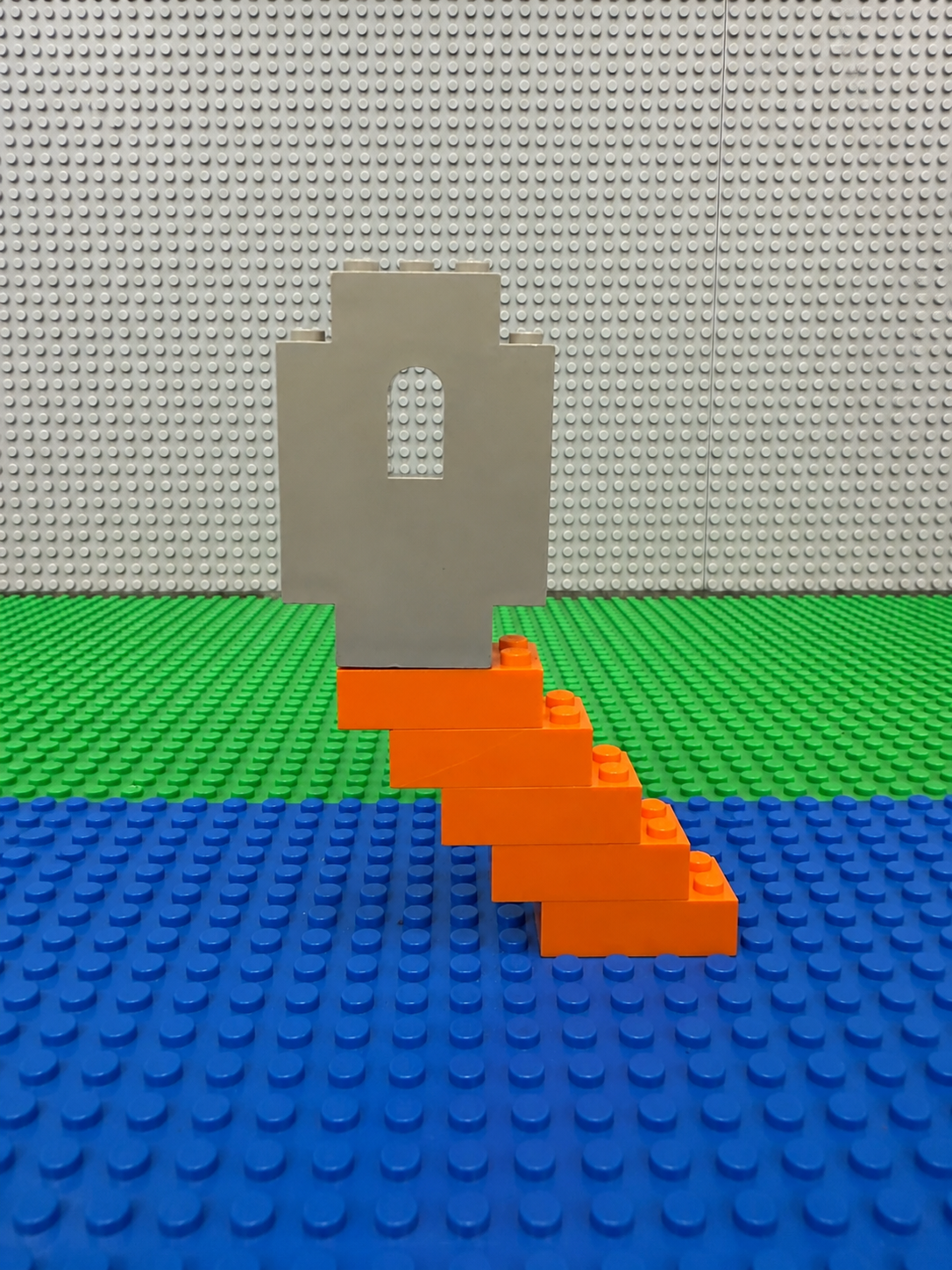
A LEGO® build representing the rewarding challenge often required to gain a new perspective — the orange steps represent the effort and energy you expand as you climb, and the window shows the wider view that opens up when you make it to the top.
Six Ways LEGO® Serious Play Improves Strategic Conversations
1. It creates the pause that real reflection needs.
Strategic conversations move at the speed of conversation — which is fast. People respond in seconds. There's no room to actually think.
Building takes time. Not much — usually four to six minutes per prompt — but those minutes are structural reflection time. Everyone in the room gets that pause. Nobody has to justify taking it. And in that pause, people start to notice what they actually think, not what they were about to say.
This is the piece most leaders underestimate. They know their team needs to think more deeply about hard questions. They don't always see that the medium of a normal meeting makes that kind of thinking almost impossible. Building gives the team permission — and structure — to slow down.
2. It helps people put words to things they couldn't quite name.
There's a phenomenon that shows up almost every time I run a LEGO® Serious Play-inspired exercise: someone will finish sharing the meaning of their build and say something like, "I didn't realize I thought that until I built it."
The hands surface what the verbal mind hadn't yet articulated. This is grounded in what researchers call the hand-mind connection — a well-documented finding that physical construction accesses associations and metaphors that pure verbal thinking often misses. When your hands are engaged, the language part of your brain relaxes its grip on meaning-making, and something more intuitive comes forward.
For strategic conversations, this matters enormously. The insight your team most needs is often the one no one has quite said yet. Building with simple bricks often surfaces it.
3. It gives people language they didn't have before.
Once a build is on the table, it becomes a metaphor the team can keep referring to long after the session ends.
"That's the staircase you built."
"This is like the door and the wall situation we talked about."
The build becomes shared vocabulary for something the team couldn't quite talk about before.
Strategic conversations often stall because the team lacks the language for what it's actually trying to work through. Building gives them that language. It's not abstract — it's a bright yellow door, a staircase, a lamp. The metaphor is concrete, and the whole team now shares it.
4. It changes who gets to speak in the room.
The 100% participation principle is designed into the method: everyone builds, and everyone shares the meaning of their build. There's no floor to hold, no interrupting to manage, no dominant voice to work around.
For teams whose meetings are typically dominated by two or three people, this alone can transform what surfaces. Voices that don't usually make it into strategic conversations suddenly do. And what they contribute is often exactly what the team has been missing.
This is one of the reasons LEGO® Serious Play works so well as part of a broader team development engagement. Once your team has experienced what a genuinely inclusive conversation feels like, it becomes possible to build toward that in ordinary meetings, too. If you want to see how this integrates with the other team frameworks I use — CliftonStrengths, Working Genius, EQ-i 2.0 — you can explore my team building offerings.
5. It surfaces patterns the team couldn't see in conversation alone.
One build is interesting. Six or eight builds sitting on the same table together are a system.
When a team looks at their individual builds in relation to one another, patterns emerge that no one saw before. Two people's builds are pointing in different directions. Someone's build sits at the edge of the group. The team as a whole has built a lot of doors — or a lot of walls. Suddenly the team's collective shape becomes visible in a way that words alone couldn't render.
This is where strategic conversations tend to get their most valuable moments. It's not any one build that does the work. It's how the builds sit together, and what the team notices when they look at the whole.
6. It creates a shared artifact the team can come back to.
Most insights from strategic meetings evaporate. The whiteboard gets erased. The notes get filed. Two weeks later, the team is back where it started.
A build doesn't evaporate. It sits on someone's desk or on a shared table. The team can walk back into the room, point to it, and pick the conversation back up. The physical presence of the artifact anchors the insight in a way that a meeting recap never quite manages.
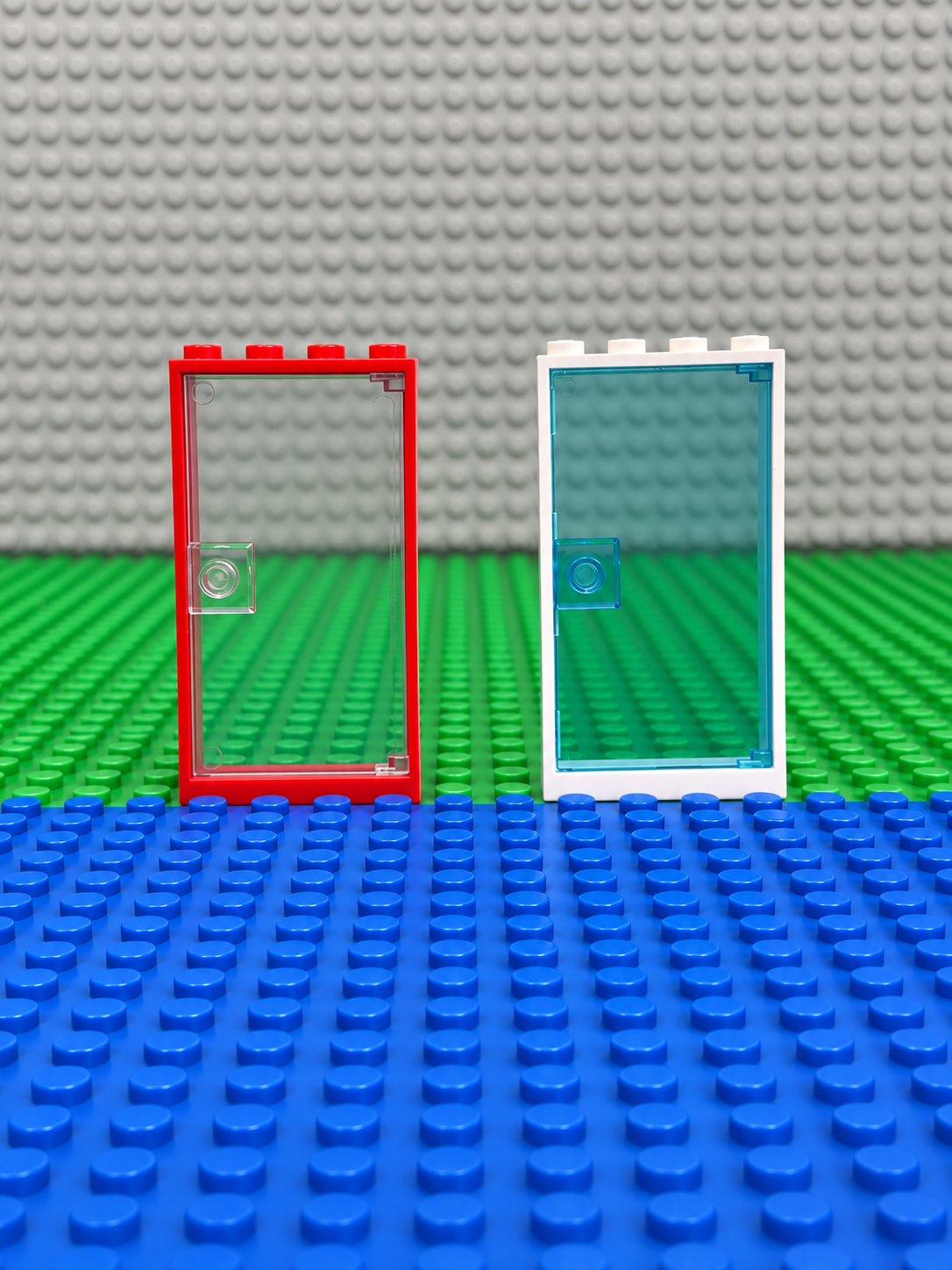
A simple LEGO® build representing what makes hard conversations possible — two open doors, representing transparency, resting on the shared ground of growth and calm.
When LEGO® Serious Play Is the Right Fit — and When It Isn't
LEGO® Serious Play isn't the right method for every team conversation. Here's when I recommend it, and when I don't.
It fits well when:
Your team needs to have a strategic conversation they've been circling for a while
The topic is layered enough that just conversation keeps flattening it
You want every voice on the team contributing, not just the loudest few
You have at least a few hours to dedicate — this method doesn't work well as a 30-minute add-on
You're working with a group in the four-to-ten person range (larger groups need to be broken into tables, each with dedicated facilitation)
It isn't the right fit when:
Your team needs to make a fast operational decision with a hard deadline
The presenting issue is really about one person's performance rather than team dynamics
You have less than a few hours to work with
The team is in active crisis with no baseline of psychological safety
For teams in the first bucket, LEGO® Serious Play is often the method that finally moves a stuck conversation. For teams in the second, other tools — a straight facilitated conversation, one-on-one coaching, an assessment debrief — will serve better.
FAQs
-
LEGO® Serious Play is a facilitation methodology in which team members build physical models from LEGO® bricks to externalize thinking, surface insights, and align around a shared direction. Developed in the 1990s in partnership with the LEGO® Group, it's used by teams around the world for strategic conversations, team alignment, and complex problem-solving.
-
Most team-building activities focus on interaction — fun, connection, breaking down formality. A LEGO® Serious Play workshop is designed to help teams have specific kinds of conversations they can't easily have any other way. The building isn't the activity; the building is the medium through which the team thinks together.
-
The method is especially useful for conversations about team vision, values, alignment, and dynamics. It's less useful for time-pressured operational decisions or fact-based analysis. If your team needs to work through something layered, nuanced, or long-avoided, LEGO® Serious Play can move the conversation forward in ways ordinary meetings can't.
-
Effective sessions run at least a few hours, with half-day and full-day formats being most common for deeper strategic work. Shorter sessions can offer a taste of the methodology but rarely deliver the depth that longer engagements do.
-
A LEGO® Serious Play facilitator is a trained practitioner who guides the team through a specific sequence of prompts and reflections. Certification matters because the methodology has specific disciplines — how prompts are framed, how sharing is guided, how questions are asked about the models — that aren't intuitive. You can learn more about my approach as a LEGO® Serious Play facilitator here.
Ready to Have a More Intentional, Strategic Conversation with Your Team?
Most leadership teams know the conversation they need to have. They just can't quite figure out how to have it.
That's where I come in. My team facilitation practice draws on LEGO® Serious Play alongside CliftonStrengths, Working Genius, EQ-i 2.0, MBTI, and the Enneagram — layered together to match what your team actually needs. Whether you're navigating a strategic pivot, a leadership transition, or a team dynamic that's stalled progress, I can help you design the kind of session that gets the conversation unstuck.
If you're leading a team in the St. Louis area or working remotely from anywhere, I'd welcome a conversation about what your team needs. You can explore my team building workshops here or learn more about how I facilitate LEGO® Serious Play sessions.
Schedule a free consultation and let's talk about what your team actually needs.

Dr. Bethany Peters is a Professional Certified Coach (PCC) and leadership expert who helps individuals, teams, and organizations grow through leadership coaching, executive development, team facilitation, and evidence-based assessments. Whether she's coaching one-on-one or leading a workshop, Bethany creates practical, engaging experiences that help people communicate better, lead with confidence, and create lasting change.