“Deliberate wisdom is the set of intentional mental habits that help leaders think clearly in any situation.”
Have you ever finished a leadership book, underlined half the pages, and felt genuinely inspired by what you’d read—only to find yourself navigating the same familiar leadership challenges a few weeks later?
Perhaps you're hoping to become more intentional about developing your team. Or you're working on managing your own reactions to uncertainty, navigating difficult relationships, or creating more space for the kind of strategic thinking that seems increasingly elusive in your day-to-day work.
Finding a book that speaks directly to your current leadership challenges can make a significant difference in how much you take away from the reading experience.
If you've followed my work for a while, you probably know how much I love discovering and creating resources to support leadership development. It's one of my favorite aspects of being a leadership coach—and one of the reasons I've enjoyed developing my collection of Leadership Development Tools.
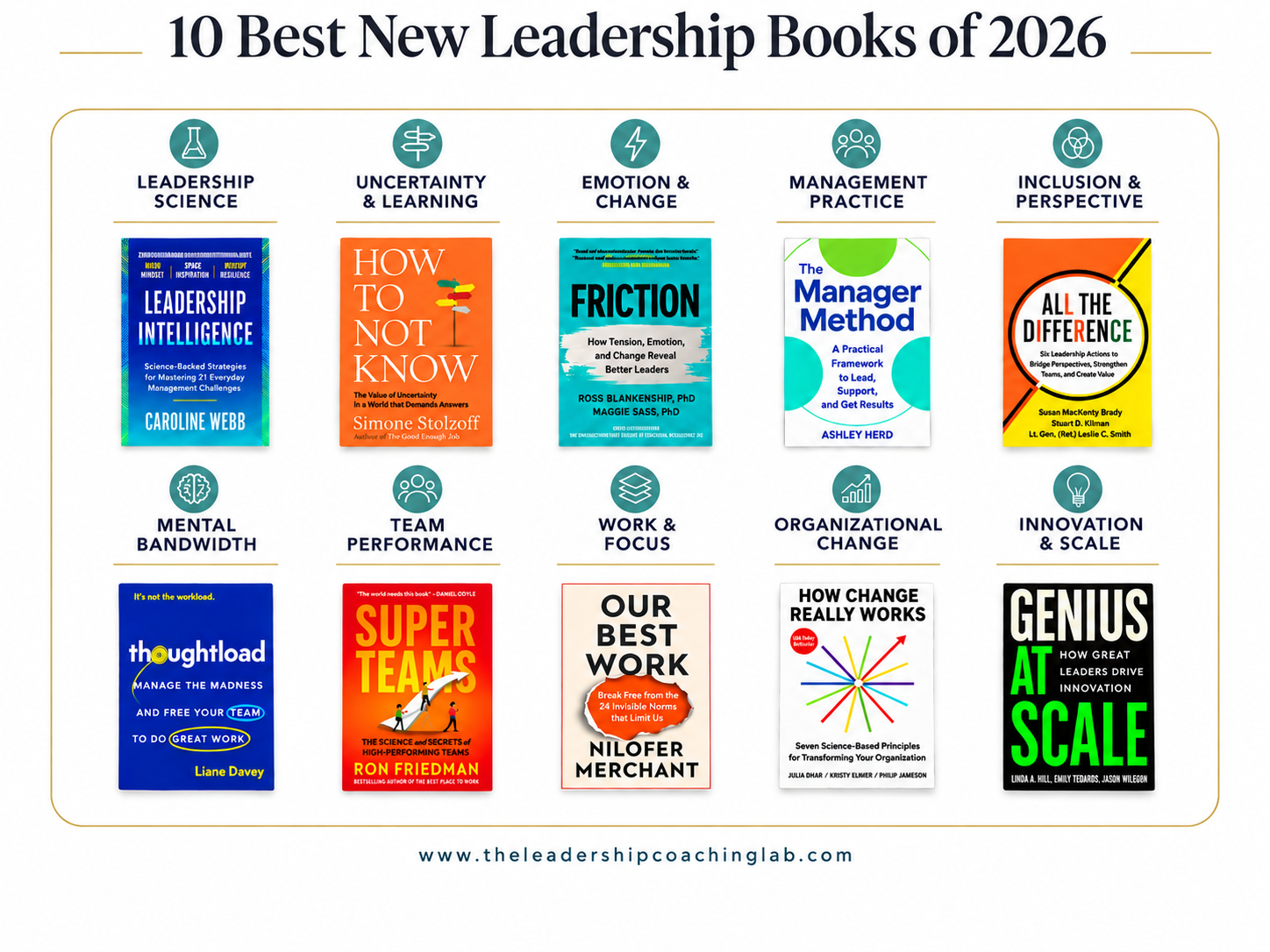
For this year's leadership reading list, I've curated ten books published in 2026 that offer fresh perspectives on developing ourselves, developing others, and creating the conditions for people and organizations to thrive.
Along with an overview of each book, I've included reader ratings and feedback, ideas for how each book might contribute to your leadership development, and an original coaching question to help you begin exploring its concepts in your own work.
My hope is that you'll discover a few books you're excited to read—and perhaps a new direction for your own leadership growth.
What Made the List
What makes a leadership book worth reading?
In curating this year's list, I've focused on books originally published in 2026. I've also considered five key factors:
Relevance to leadership development: Does the book address a meaningful challenge or opportunity for leaders?
Credibility and substance: What expertise, research, or professional experience informs the author's approach?
Originality: Does the book introduce a fresh perspective, offer a useful framework, or deepen our understanding of an important leadership concept?
Reader reception: What do Amazon and Goodreads ratings and available written reviews suggest about the reader experience?
Practical application: How might the ideas in the book translate into greater self-awareness, stronger relationships, or more effective leadership practices?
This guide draws on publisher and author materials, available reader feedback, and my professional perspective on leadership development. I've also intentionally selected books that address different dimensions of leadership, so there are several possible entry points depending on your interests and development priorities.
A note on reader ratings: Amazon and Goodreads ratings reflect research snapshots collected in November 2026. The numbers in parentheses indicate the number of ratings, which may include readers who have not written a review. Some of these books are very recent releases, so their ratings reflect feedback from a relatively small group of readers. The reader-feedback summaries draw primarily on accessible Goodreads reviews, including some reviews of advance or gifted copies; they are not a comprehensive analysis of every review on both platforms.
The books are numbered for easy reference rather than ranked from best to worst.
2026 Leadership Books at a Glance
| Book | Amazon | Goodreads |
|---|---|---|
| 1. Leadership Intelligence | 4.9 (140) | 4.70 (75) |
| 2. How to Not Know | 4.6 (238) | 4.04 (799) |
| 3. Friction | 5.0 (127) | 4.75 (4) |
| 4. The Manager Method | 4.9 (39) | 4.36 (28) |
| 5. All the Difference | 5.0 (23) | 3.88 (8) |
| 6. Thoughtload | 5.0 (11) | 4.05 (44) |
| 7. Superteams | 4.8 (94) | 4.24 (145) |
| 8. Our Best Work | 4.6 (23) | 4.39 (20) |
| 9. How Change Really Works | 4.9 (86) | 4.34 (76) |
| 10. Genius at Scale | 4.3 (58) | 3.91 (58) |
All ratings are out of 5. Numbers in parentheses are rating counts, not written reviews. Collected November 2026; ratings may change.
1. Leadership Intelligence
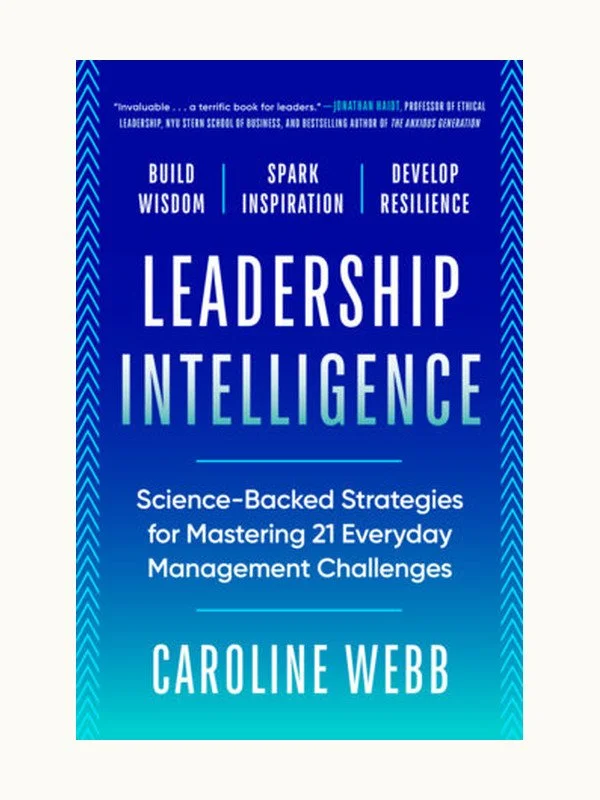
Leadership Intelligence: Science-Backed Strategies for Mastering 21 Everyday Management Challenges
By Caroline Webb
Published September 2026 | Crown Currency
Reader ratings: Amazon 4.9/5 (140 ratings) · Goodreads 4.70/5 (75 ratings)
Find on Amazon | Explore Goodreads reviews | Author's website
Best for: Leaders who want to apply behavioral science to everyday leadership challenges.
What the book is about
Why do we sometimes respond to challenging situations at work in ways that seem counterproductive, even when we know better?
In Leadership Intelligence, behavioral science expert and executive coach Caroline Webb explores how a greater understanding of the brain and human behavior can help us navigate the everyday complexities of leadership.
Drawing on research from psychology, neuroscience, and behavioral economics, Webb organizes her insights around 21 common management challenges. She offers practical frameworks, strategies, and examples designed to help leaders become more intentional about how they think, communicate, make decisions, and interact with others.
What readers are saying
Reviews highlight Webb's ability to translate behavioral science into approachable strategies, practical frameworks, and useful language for everyday leadership situations.
Several readers appreciate the book's usefulness as an ongoing reference for management challenges rather than something to read once and put away. The combination of scientific explanations and actionable guidance is a highlight of the book.
How this book can help you grow as a leader
One of the things I appreciate about a behavioral science approach to leadership development is that it helps us become more curious about our own behavior. Understanding what drives our reactions can help us recognize opportunities to respond differently.
If you're working on becoming less reactive, navigating challenging conversations, or developing more intentional leadership habits, this book could offer a helpful framework for experimenting with new approaches.
What leadership situation could benefit from a fresh perspective?
2. How to Not Know
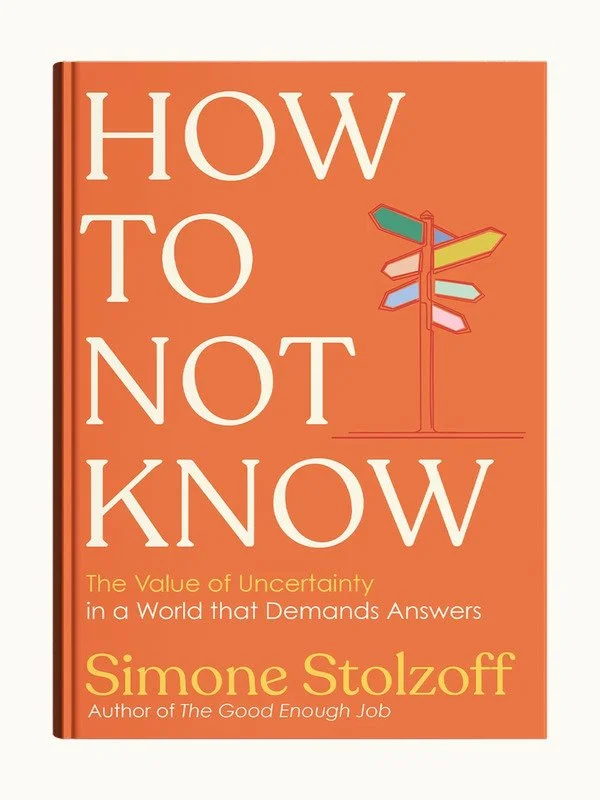
How to Not Know: The Value of Uncertainty in a World That Demands Answers
By Simone Stolzoff
Published May 2026 | W. W. Norton & Company
Reader ratings: Amazon 4.6/ (238 ratings) · Goodreads 4.04/5 (799 ratings)
Find on Amazon | Explore Goodreads reviews | Author's website
Best for: Leaders navigating uncertainty, complex decisions, or the pressure to always have the answers
What the book is about
Leadership often comes with an unspoken expectation that we should know what to do next.
Yet some of the most consequential decisions we make involve incomplete information, competing perspectives, and circumstances that are continuing to change.
In How to Not Know, journalist and author Simone Stolzoff explores our relationship with uncertainty and the ways we attempt to manage the discomfort of not knowing. Drawing on research and stories from a variety of contexts, he examines how our desire for certainty can influence the way we think, make decisions, and approach the future.
The book invites readers to consider how greater openness to uncertainty might expand their capacity for curiosity, adaptability, and learning.
What readers are saying
With nearly 800 Goodreads ratings at the time of this roundup, How to Not Know has attracted considerable reader interest.
Readers appreciate Stolzoff's thoughtful storytelling, the variety of examples he explores, and the permission the book offers to become more comfortable with ambiguity.
Some readers find the narrative approach less directly actionable than they had anticipated, and others connect more strongly with certain stories than with others. If you're looking for a step-by-step management framework, this may be a more reflective reading experience.
How this book can help you grow as a leader
How much of our ability to learn as leaders depends on our willingness to acknowledge what we don't yet understand? For those accustomed to being the person others turn to for answers, becoming more comfortable with uncertainty can represent an important developmental shift.
This book may help you recognize when your discomfort with ambiguity is creating pressure to make a premature decision—and when staying curious a little longer might lead to a better outcome.
Where might curiosity serve you better than having a concrete answer?
3. Friction
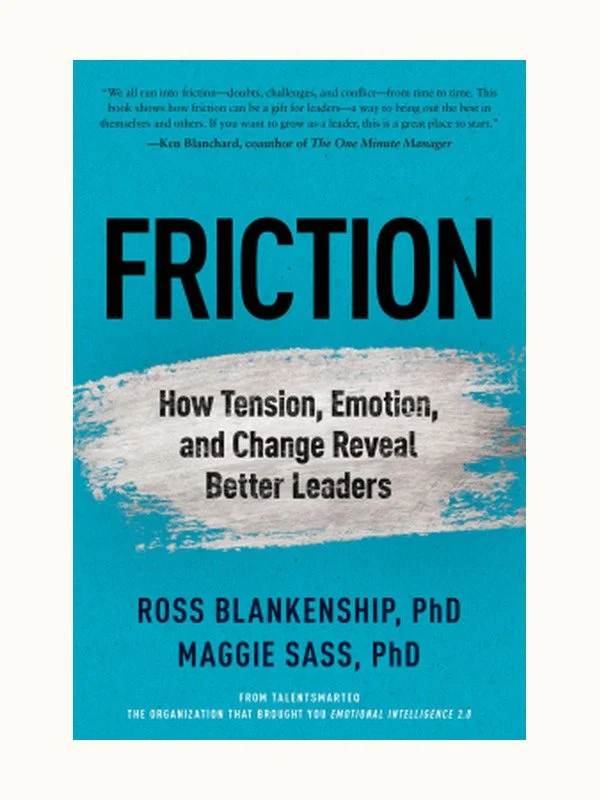
Friction: How Tension, Emotion, and Change Reveal Better Leaders
By Maggie Sass and Ross Blankenship
Published September 2026 | TalentSmartEQ
Reader ratings: Amazon 5.0/5 (127 ratings) · Goodreads 4.75/5 (4 ratings)
Find on Amazon | Explore Goodreads reviews | Publisher's website and resources
Best for: Leaders who want to navigate emotional tension, interpersonal conflict, and challenging workplace dynamics more effectively.
What the book is about
Think about a recurring point of friction in your work. Perhaps it's a colleague whose approach consistently frustrates you, a decision-making process that seems unnecessarily complicated, or a team dynamic that keeps resurfacing despite your efforts to address it.
Organizational psychologists Maggie Sass and Ross Blankenship invite us to consider what these experiences might reveal. The authors explore tension at three levels: within ourselves, between people, and within the organizational systems in which we work.
Their approach draws on organizational psychology and emotional intelligence research to help leaders recognize and work with these different sources of friction. The book includes 45 practical strategies and experiments, along with downloadable companion resources.
What readers are saying
The book has received positive early feedback on Amazon, with a 5.0-star rating from 127 ratings.
Reader feedback highlights the value of recognizing friction as a source of information and appreciates the combination of evidence-informed insights and practical exercises. However, one reviewer suggested that the large number of experiments could feel demanding.
How this book can help you grow as a leader
What intrigues me about this book is its attention to multiple sources of workplace tension. Recurring friction might be connected to our own emotional patterns, a challenging relationship, unclear expectations, or aspects of the broader organizational system.
Developing the ability to distinguish between these possibilities can help you respond more thoughtfully and recognize opportunities for learning that might otherwise go unnoticed.
What might a recurring point of friction at work be revealing about something that needs your attention—in yourself, a relationship, or the system in which you're leading?
4. The Manager Method
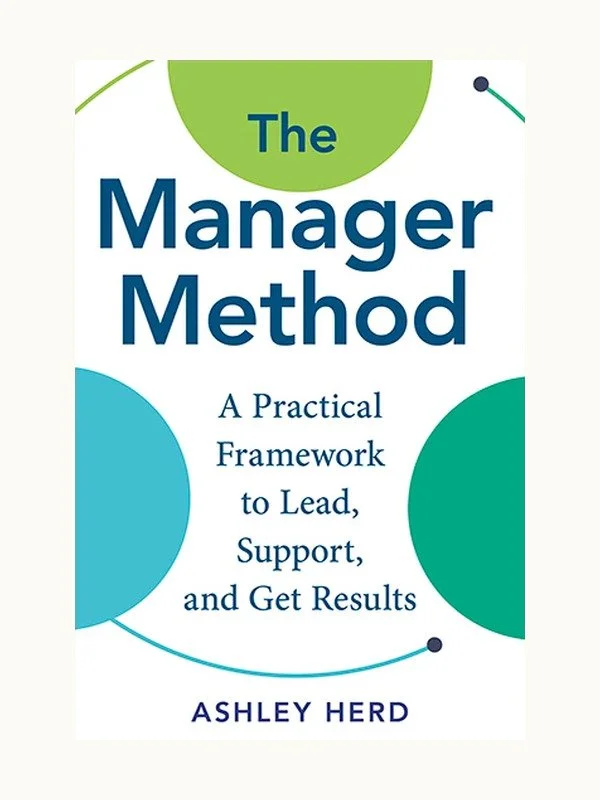
The Manager Method: A Practical Framework to Lead, Support, and Get Results
By Ashley Herd
Published February 2026 | Hay House Business
Reader ratings: Amazon 4.9/5 (39 ratings) · Goodreads 4.36/5 (28 ratings)
Find on Amazon | Explore Goodreads reviews | Author's website and companion resources
Best for: Newer managers looking for practical guidance on the everyday responsibilities of leading people.
What the book is about
One of the challenges of becoming a manager is that the situations requiring our attention often arise before we've had much opportunity to develop the skills we need to navigate them.
How do you address a performance concern with someone you used to work alongside?
How do you respond when an employee shares a difficult personal situation?
How do you balance supporting your team with holding people accountable for their work?
Drawing on her experience in human resources, employment law, and management training, Ashley Herd offers a practical framework for approaching these kinds of challenges.
Her three-step Manager Method—Pause, Consider, Act—encourages managers to take a more thoughtful approach to responding to workplace situations, considering their options, and choosing an appropriate course of action.
What readers are saying
Early ratings on both Amazon and Goodreads suggest strong reader satisfaction.
The book's clearly defined framework and the author's accompanying worksheets, reflection resources, and discussion guides are promising features for readers seeking practical management development.
How this book can help you grow as a leader
One of the developmental challenges I often see new managers face is resisting the instinct to immediately solve problems for others. Learning to pause and consider what a situation actually requires from you can open up more opportunities to develop your team's capabilities.
If you're in the first few years of management, this book could help you establish more intentional practices and develop greater confidence in navigating unfamiliar situations.
Which responsibility of your management role would benefit most from a more intentional, consistent practice?
5. All the Difference
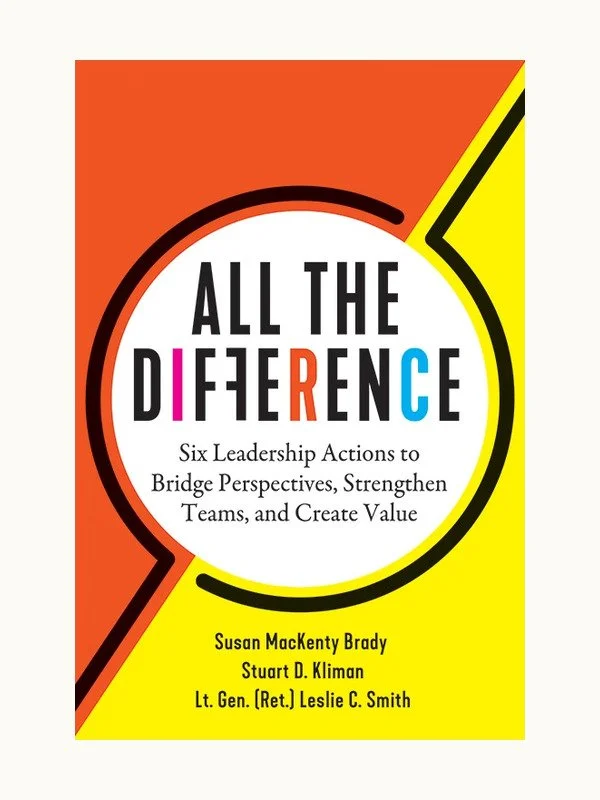
All the Difference: Six Leadership Actions to Bridge Perspectives, Strengthen Teams, and Create Value
By Susan MacKenty Brady, Stuart D. Kliman, and Leslie C. Smith
Published July 2026 | Harvard Business Review Press
Reader ratings: Amazon 5.0/5 (23 ratings) · Goodreads 3.88/5 (8 ratings)
Find on Amazon | Explore Goodreads reviews | Publisher's website
Best for: Leaders seeking to build stronger relationships and work more effectively across differences.
What the book is about
What happens when the people we work with approach problems, communicate, make decisions, or interpret workplace experiences in fundamentally different ways?
Although we often recognize the value of diverse perspectives, navigating those differences in the context of everyday workplace interactions can be considerably more challenging.
In All the Difference, the authors introduce six leadership actions designed to help leaders recognize and bridge differences: developing self-awareness, returning to respect, activating honesty, seeing the full story, fostering togetherness, and committing to action.
The book draws on the authors' experiences in executive leadership, organizational development, and the military to explore how these practices can help leaders strengthen relationships and collaborate more effectively across differences.
What readers are saying
Early Amazon feedback is very positive, although Goodreads ratings reflect a more mixed reader experience.
Available reviews appreciate the recognizable workplace examples, accessible presentation, and emphasis on translating self-awareness into concrete leadership actions. Some readers find the ideas relatively familiar or would welcome greater depth in addressing the complexities of difference and organizational power.
The book may be especially useful for leaders seeking an accessible framework for beginning or strengthening this work.
How this book can help you grow as a leader
We can easily interpret someone else's behavior through the lens of our own preferences, experiences, or expectations. Developing our capacity to lead across differences involves becoming more aware of those interpretations and more curious about the perspectives informing someone else's behavior.
This book could help you examine the assumptions shaping your workplace relationships and identify opportunities to build greater mutual understanding within your team.
Whose perspective might challenge an assumption you've been making about what effective leadership looks like?
6. Thoughtload
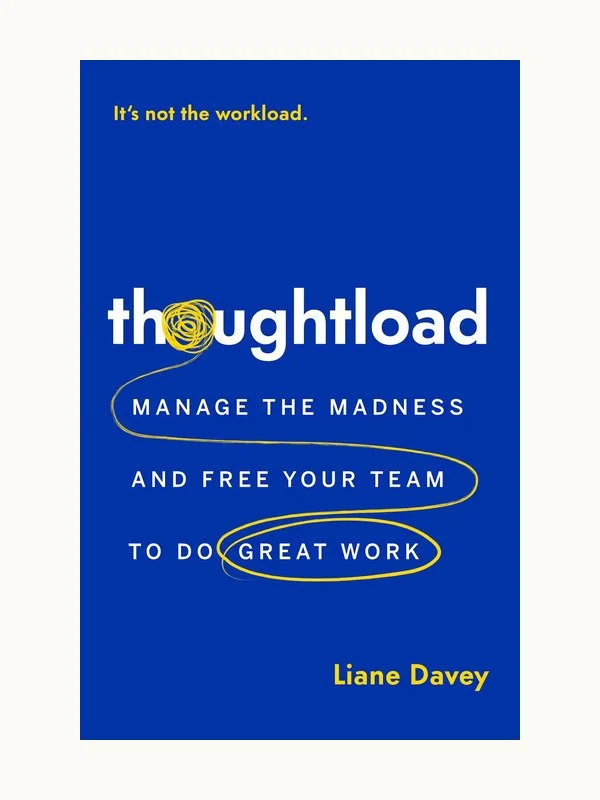
Thoughtload: Manage the Madness and Free Your Team to Do Great Work
By Liane Davey
Published May 2026 | Page Two
Reader ratings: Amazon 5.0/5 (11 ratings) · Goodreads 4.05/5 (44 ratings)
Find on Amazon | Explore Goodreads reviews | Publisher's website
Best for: Leaders whose teams are overwhelmed by competing priorities, information, and mental demands.
What the book is about
Have you ever reached the end of a workday feeling mentally exhausted, even though you haven't accomplished much of what you intended to do?
Perhaps you've spent the day shifting between conversations, responding to messages, thinking through unresolved decisions, or mentally tracking a dozen different priorities.
Organizational psychologist and team effectiveness expert Liane Davey introduces the concept of thoughtload to help us better understand these experiences.
She explores the cognitive and emotional demands that accompany our work, including the mental effort involved in navigating competing priorities, managing interruptions, and carrying unresolved concerns.
The book offers strategies for recognizing and reducing these demands so teams can devote more of their mental capacity to the work that matters most.
What readers are saying
Early readers appreciate the language Davey provides for understanding the often invisible mental burden of work. Available Goodreads feedback highlights the relevance of the concept to everyday workplace experiences and the practical nature of her insights.
Independent editorial reviews also emphasize the book's accessible presentation and attention to the conditions that influence people's ability to think clearly and do their best work.
How this book can help you grow as a leader
One of the things I find especially valuable about the concept of thoughtload is its potential to expand our understanding of team capacity. This book could help you identify some of the less visible demands on your team's energy and examine how your own leadership practices contribute to—or alleviate—that mental burden.
What mental load is your team carrying that you could help reduce?
7. Superteams
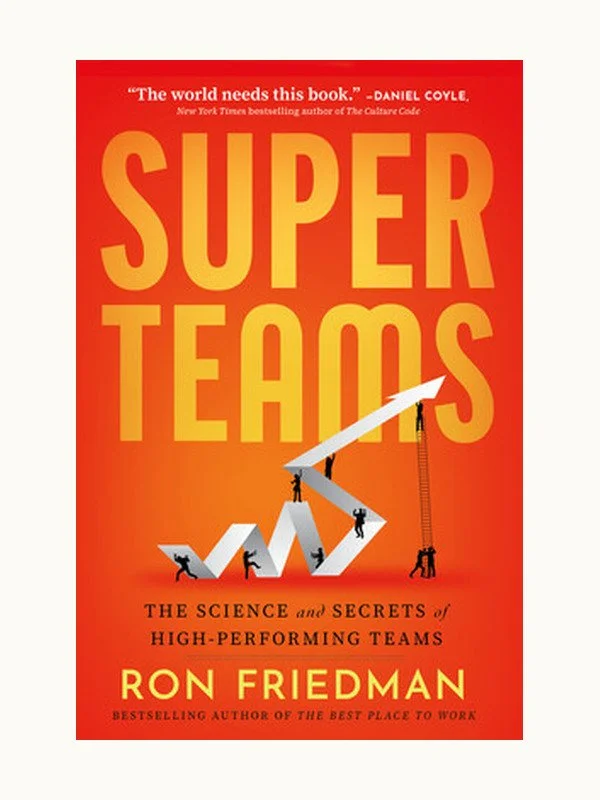
Super Teams: The Science and Secrets of High-Performing Teams
By Ron Friedman
Published June 2026 | Simon & Schuster
Reader ratings: Amazon 4.8/5 (94 ratings) · Goodreads 4.24/5 (145 ratings)
Find on Amazon | Explore Goodreads reviews | Publisher's website
Best for: Leaders interested in the science of building high-performing, collaborative teams.
What the book is about
What distinguishes an exceptional team from a group of exceptionally talented individuals?
Social psychologist and organizational researcher Ron Friedman explores this question in Superteams, drawing on extensive research into the habits and practices of high-performing teams.
The book examines how effective teams manage their attention, collaborate with one another, and create opportunities for continued growth. Friedman explores the everyday practices that contribute to these conditions, including how teams communicate, organize their work, and learn together.
His approach offers a research-informed look at the ways seemingly small adjustments to team practices can influence collective performance.
What readers are saying
Readers appreciate the book's research-based approach, its practical examples, and its attention to the ways collaboration actually unfolds within teams.
Some readers find the concepts readily applicable to their own workplaces, while others would prefer a more concise presentation or greater detail about particular research findings.
Overall, early reception suggests the book offers a useful combination of team effectiveness research and practical implications for leaders.
How this book can help you grow as a leader
It's easy to become so focused on the individual performance of the people we lead that we overlook the dynamics influencing how they perform together. How effectively does your team use its collective time and attention? What opportunities do people have to learn from one another?
Superteams could help you identify the everyday practices that support your team's best work and consider which ones you want to cultivate more intentionally.
When does your team bring out the best in one another, and what conditions make that possible?
8. Our Best Work
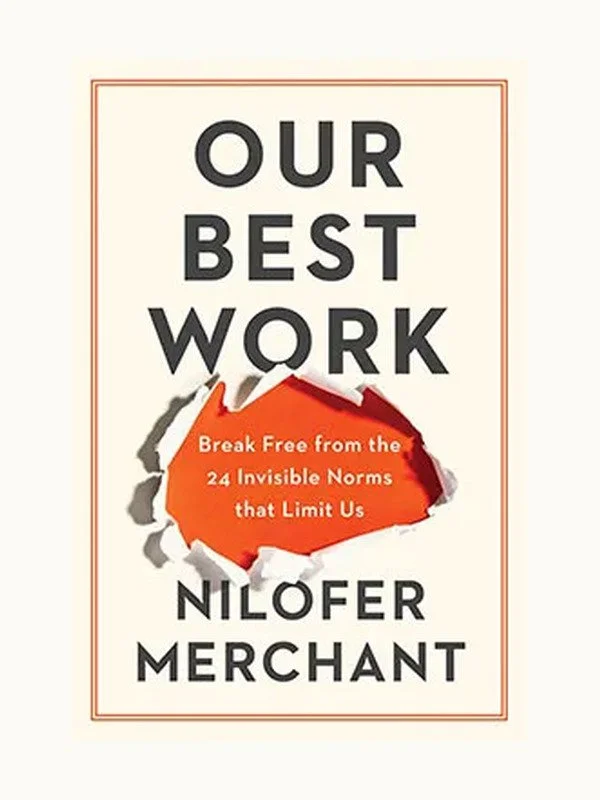
Our Best Work: Break Free from the 24 Invisible Norms That Limit Us
By Nilofer Merchant
Published February 2026 | Harper Business
Reader ratings: Amazon 4.6/5 (23 ratings) · Goodreads 4.39/5 (20 ratings)
Find on Amazon | Explore Goodreads reviews | Author's website
Best for: Leaders who want to rethink workplace norms and create conditions for people to contribute their best work.
What the book is about
Every organization has its own set of unwritten rules.
Some are relatively easy to recognize: who typically speaks first in meetings, which kinds of contributions are rewarded, or how much autonomy people have to make decisions.
Others are so deeply embedded in our assumptions about work that we rarely think to question them.
In Our Best Work, business thinker Nilofer Merchant explores 24 norms that can limit people's ability to contribute meaningfully. She invites readers to reconsider familiar workplace practices and ideas, examining the underlying assumptions that influence how organizations operate.
Her approach encourages leaders to become more intentional about designing workplaces in which people have greater opportunities to exercise their capabilities and contribute their unique perspectives. Each chapter closes with a practice readers can explore with their teams.
What readers are saying
Reviews highlight Merchant's ability to identify and name assumptions about work that often go unquestioned.
Readers appreciate the book's attention to the human experience of work and its applicability beyond traditional business settings, including education and other organizational contexts.
How this book can help you grow as a leader
If you're familiar with my work in strengths-based leadership, you'll know how interested I am in the relationship between people's unique capabilities and the environments in which they work.
This book could help you examine whether some of your team's established practices unintentionally favor certain ways of thinking, communicating, or contributing—and identify opportunities to draw out more of the talent that already exists within your team.
What unwritten workplace rule might be holding you or your team back?
9. How Change Really Works
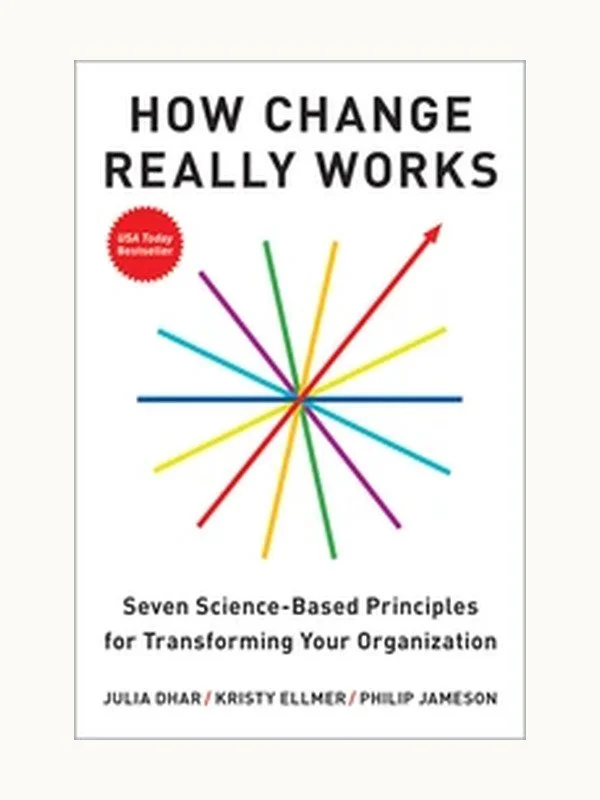
How Change Really Works: Seven Science-Based Principles for Transforming Your Organization
By Julia Dhar, Kristy R. Ellmer, and Philip Jameson
Published May 2026 | Harvard Business Review Press
Reader ratings: Amazon 4.9/5 (86 ratings) · Goodreads 4.34/5 (76 ratings)
Find on Amazon | Explore Goodreads reviews | Publisher's website
Best for: Leaders responsible for guiding organizational change and helping people develop new ways of working.
What the book is about
If you've ever been responsible for implementing a new initiative, you may be familiar with the experience of seeing enthusiastic support gradually give way to familiar habits.
People attend the kickoff meeting. They understand the rationale for the change. They may even genuinely agree with the direction you're moving in. Yet several months later, the anticipated changes in behavior are difficult to see.
In How Change Really Works, the authors draw on behavioral science and organizational change experience to explore what helps people adopt and sustain new ways of working.
They introduce seven science-based principles, examining how leaders can design change initiatives with greater attention to the conditions influencing people's behavior, their opportunities for participation, and the practices needed to sustain change over time.
What readers are saying
Early feedback highlights the book's attention to the challenges of sustaining organizational change beyond its initial implementation.
Readers appreciate its behavioral science foundation, practical examples, and focus on helping people participate meaningfully in the change process.
One detailed review also points to potential limitations, including some repetition and a corporate orientation that may require readers in smaller or differently structured organizations to adapt the ideas to their own contexts.
How this book can help you grow as a leader
When people struggle to adopt a new practice, we may interpret their behavior as a lack of motivation or openness to change. But what if existing systems, expectations, and routines continue to make their familiar ways of working more practical?
This book could help you develop a more nuanced understanding of resistance to change and become more intentional about designing conditions that support lasting shifts in behavior.
What keeps people doing things the old way, even when they want something to change?
10. Genius at Scale
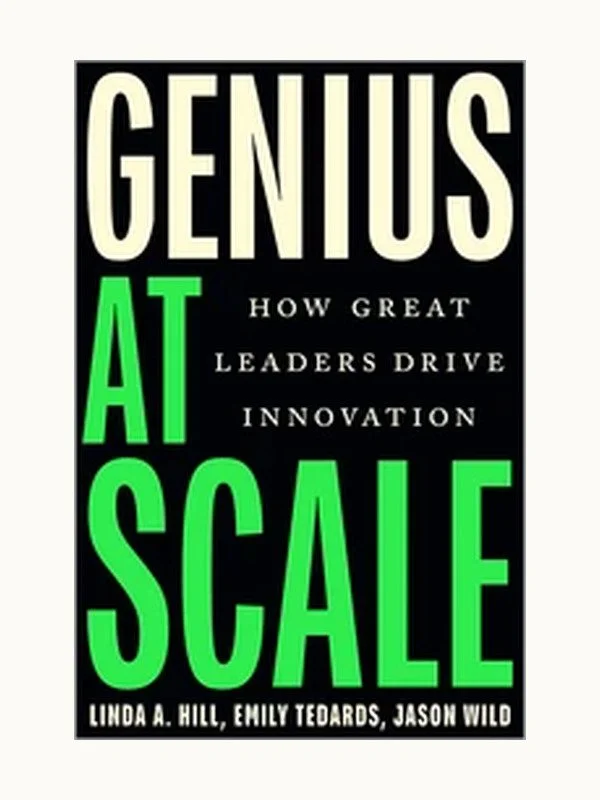
Genius at Scale: How Great Leaders Drive Innovation
By Linda A. Hill, Emily Tedards, and Jason Wild
Published March 2026 | Harvard Business Review Press
Reader ratings: Amazon 4.3/5 (58 ratings) · Goodreads 3.91/5 (58 ratings)
Find on Amazon | Explore Goodreads reviews | Publisher's website
Best for: Senior leaders interested in building organizational capacity for innovation and collective creativity.
What the book is about
How can leaders create the conditions for innovation to emerge across an entire organization?
Harvard Business School professor Linda A. Hill and her coauthors build on research into innovation leadership to examine how leaders can cultivate and connect creative capabilities at scale.
They introduce three interconnected leadership roles:
Architects create organizational cultures and conditions that support innovation.
Bridgers connect people, perspectives, and capabilities across organizational boundaries.
Catalysts help mobilize broader networks and ecosystems to create new possibilities.
Through examples of innovation leadership, the authors explore how these roles contribute to an organization's ability to generate and implement new ideas.
What readers are saying
Available reader reviews appreciate the leadership examples, the accessibility of the authors' framework, and the opportunities it provides for reflecting on innovation within organizations.
Its overall reader ratings are somewhat more mixed than several other books on this list. However, the authors' research background and the book's distinctive contribution to the conversation about innovation leadership make it worth considering, particularly for leaders working at an organizational or strategic level.
How this book can help you grow as a leader
I'm particularly interested in the role of leadership in facilitating collective creativity. Some of the most interesting ideas emerge when we bring together people who have different areas of expertise, perspectives, and ways of thinking.
This book could help you explore how to develop your capacity to facilitate that process, whether by creating conditions that support experimentation, connecting people across boundaries, or bringing together diverse perspectives around a shared challenge.
What idea could your organization bring to life if you connected people who rarely have an opportunity to think together?
Which Leadership Book Should You Read Next?
| If you're working on... | Start with... |
|---|---|
| Everyday leadership effectiveness | Leadership Intelligence |
| Navigating uncertainty | How to Not Know |
| Navigating tension and conflict | Friction |
| Finding your footing as a manager | The Manager Method |
| Leading across differences | All the Difference |
| Reducing mental overload and improving focus | Thoughtload |
| Building high-performing teams | Superteams |
| Challenging workplace norms | Our Best Work |
| Sustaining organizational change | How Change Really Works |
| Leading innovation at scale | Genius at Scale |
Turn Your Reading List Into a Leadership Development Practice
One of my favorite ways to approach professional reading is to think about what I'm hoping to develop before I even open the book.
What am I curious about? What leadership challenge am I trying to navigate? What aspects of my own behavior or thinking am I interested in understanding more deeply?
Here are four simple practices you might experiment with as you work through your reading list:
Read with a development intention. Identify a specific leadership challenge or capability you want to explore through your reading.
Reflect on the implications. As you encounter an interesting idea, consider how it connects to your own experiences, assumptions, or leadership practices.
Experiment with one practice. Choose something specific to try in your work. It might be a different approach to a conversation, an adjustment to how you facilitate team meetings, or a new way of responding to a familiar challenge.
Revisit what you've learned. After a few weeks, consider what you've noticed. What changed? What did you learn about yourself or others? What might you adapt or continue practicing?
You might also consider reading one of these books with a colleague, a leadership team, or a professional development partner. The opportunity to explore different interpretations and share your experiments can add an entirely new dimension to the reading experience.
Frequently Asked Questions
-
Standout choices include Leadership Intelligence by Caroline Webb, Friction by Maggie Sass and Ross Blankenship, Superteams by Ron Friedman, and How Change Really Works by Julia Dhar, Kristy R. Ellmer, and Philip Jameson. The best choice depends on your current leadership development priorities.
-
The Manager Method by Ashley Herd is a useful 2026 choice for newer managers. Its Pause, Consider, Act framework offers a practical way to approach common people-management challenges.
-
Thoughtload by Liane Davey focuses on mental overload and team capacity, while Superteams by Ron Friedman explores the habits of high-performing teams. All the Difference offers guidance for working across differences.
-
Choose a book that addresses a current development priority. Reflect on its ideas, select one behavior to practice, and revisit what you learn from the experiment. Coaching questions can help connect the reading to your own leadership experience.
Deepen Your Leadership Development
What would you most like to develop in your leadership over the coming year?
Whether you're interested in becoming more self-aware, developing your coaching skills, building stronger relationships, or creating more effective teams, I hope this reading guide has helped you identify a few meaningful possibilities for your next steps.
And if you're looking for additional ways to translate what you're learning into intentional leadership development, I'd love to invite you to explore my collection of Leadership Development Tools.
I've designed these research-informed workbooks, reflection guides, coaching resources, and practical tools to help leaders create space for deeper thinking, develop greater self-awareness, and experiment with new leadership practices.
Schedule a free consultation if you’re interested in using these tools in coaching or teamwork.

Dr. Bethany Peters is a Professional Certified Coach (PCC) and leadership expert who helps individuals, teams, and organizations grow through leadership coaching, executive development, team facilitation, and evidence-based assessments. Whether she's coaching one-on-one or leading a workshop, Bethany creates practical, engaging experiences that help people communicate better, lead with confidence, and create lasting change.