

The Science Behind Self-Reflection: What Happens in Your Brain When You Journal

In the act of writing, we externalize our internal world, making it visible, tangible, and transformable.
—- James Pennebaker
What comes to mind when you hear the word "journaling"?
Maybe you picture gratitude lists or morning pages—practices that feel nice but insubstantial when you're facing real challenges.
Maybe you’re curious but you've resisted because it seems like a waste of time when you should be solving actual problems.
Or you've tried it before—kept it up for a few days, then let it fade because you didn’t notice any positive effects.
Maybe you're skeptical that sitting with a blank page for 15 minutes could really move the needle on your stress, clarity, or leadership effectiveness.
If any of this sounds familiar, the neuroscience behind journaling effectiveness might surprise you. When you journal, you're actively rewiring the architecture of your brain through specific neural pathways that quiet emotional reactivity, free up cognitive resources, and build long-term psychological resilience.
In this post, we’re exploring expressive writing—a specific, research-backed approach to processing the challenging experiences that occupy mental bandwidth and drain your cognitive resources. The unresolved conflicts, the persistent worries, the transitions you haven't fully digested. This differs from gratitude lists or morning affirmations, which are important but serve other purposes.
The brain science behind journaling reveals three distinct but connected processes:
Naming what you're feeling activates your brain's natural brake system
Building a story with logical connections moves fragmented memories into a coherent narrative.
Finding some resolution signals task completion that frees your working memory.
Each step engages different neural mechanisms that work together to transform how your brain interprets difficult experiences.
Your Brain's Hidden Alarm System
To understand why writing has such a powerful effect, you need to know about two neural players: the amygdala and the prefrontal cortex.
The amygdala is your brain's alarm system, constantly scanning for threats. When you encounter something emotionally charged—a stressful email, a difficult memory, an uncomfortable conversation—it activates immediately, triggering stress hormones and your fight-or-flight response. In states of chronic stress or unresolved trauma, the amygdala becomes hyperactive, interpreting neutral situations as threatening and keeping your nervous system on high alert.
The prefrontal cortex is your brain's executive control center, responsible for planning, decision-making, and thoughtful analysis.
These two systems exist in a neural seesaw:
When your amygdala is highly activated, your prefrontal cortex is diminished—you're reactive rather than reflective. But when your prefrontal cortex engages, it can dampen amygdala activity, calming the alarm and creating space for deliberate thought.
When was the last time you noticed yourself caught in a mental loop, replaying a situation without resolution?
That mental loop is your overactive amygdala at work. Expressive writing interrupts this rumination pattern and gives you a chance to make meaning from your experience, explore different perspectives, and decrease your stress levels.
Step One: Name What You're Feeling
Dr. Matthew Lieberman, a neuroscientist at UCLA, discovered something remarkable: the brain treats experiencing an emotion and naming an emotion as fundamentally different neural events.
When you label what you're feeling—"I feel anxious," "I'm frustrated"—your prefrontal cortex activates and your amygdala quiets down.

Lieberman calls this "affect labeling."
When you write "I feel anxious about the presentation" or "I'm angry that my idea was dismissed," you engage your brain's braking system, interrupt the alarm, and create the neural conditions for emotional regulation.
The key is specificity. Writing "I feel bad" doesn't activate the same regulatory pathways as writing "I feel anxious about being judged" or "I feel frustrated that I'm not making progress." The more precisely you name the emotion, the more effectively you engage this calming mechanism.
This is why the first step in effective expressive writing is simply acknowledging what happened and how it felt. At this stage, you're activating your prefrontal cortex through the act of precise emotional labeling. The analysis and problem-solving come later.
Step Two: See the Connections
Once you've named the emotion, your brain is ready to do deeper work: constructing a narrative that makes sense of the experience. This is where the most powerful healing occurs.
In the 1980s, psychologist Dr. James Pennebaker noticed something during polygraph examinations: when suspects confessed, their stress markers dropped dramatically—even when the confession would lead to consequences. This led him to investigate whether the burden of keeping secrets was degrading health.
Pennebaker developed the Expressive Writing Paradigm: participants wrote for 15-20 minutes per day for 3-4 consecutive days about their most traumatic experience, exploring their deepest thoughts and feelings. The results were measurable and profound. Compared to control groups, participants showed:
Enhanced immune function (stronger T-cell response)
Faster wound healing (76% healed in 11 days vs. 42% in controls)
Reduced blood pressure and lower cortisol levels
Fewer doctor visits in subsequent months
But here's what surprised researchers most: what participants wrote about mattered less than how they wrote about it. Using computerized text analysis, Pennebaker discovered that participants who showed the greatest health improvements weren't necessarily writing about the "worst" traumas. Instead, they were using specific language patterns.
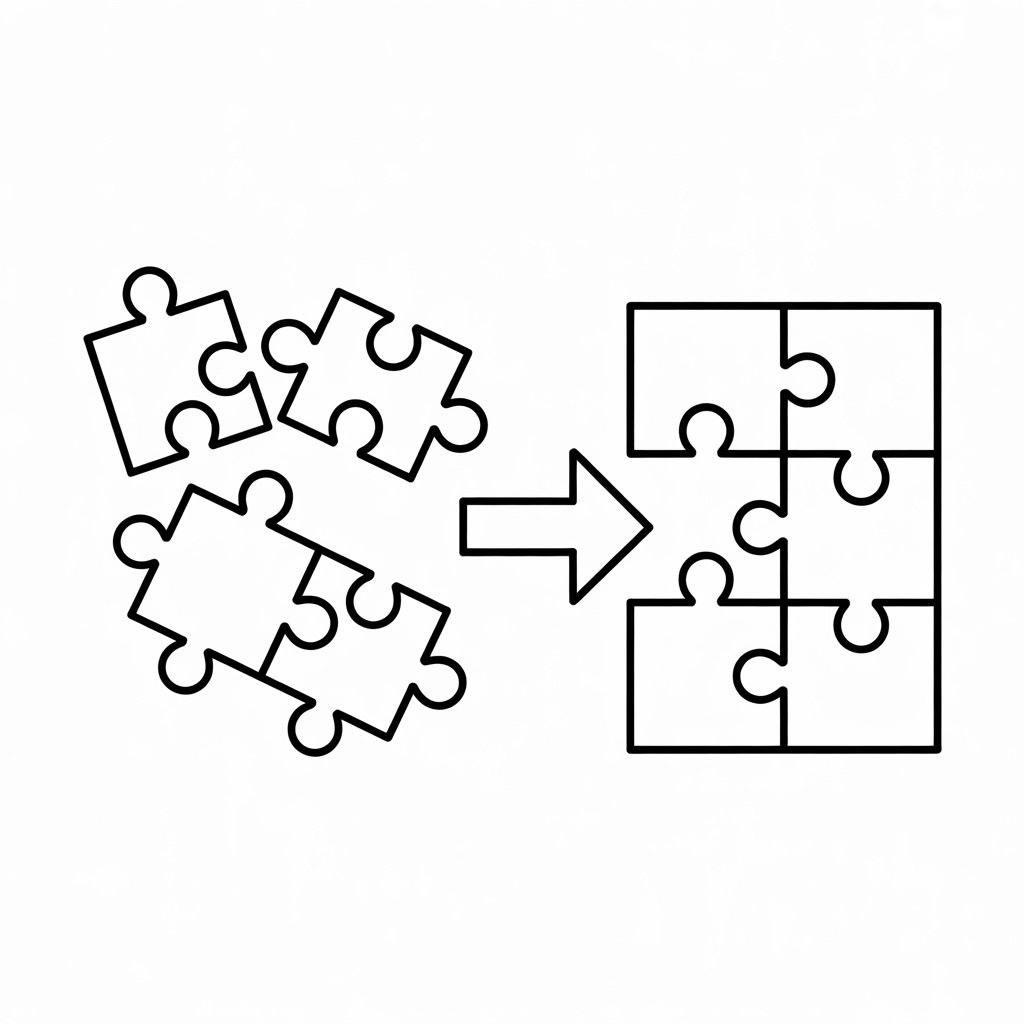
The strongest predictor of improved health was the increasing use of "meaning-making words" over the course of the writing sessions, words in these categories:
Causal words: Because, cause, effect, reason, hence, therefore
Insight words: Realize, understand, think, know, consider
Participants who started their writing with confusion and moved toward understanding—whose language showed a shift from "This terrible thing happened" to "This happened because..."—experienced the greatest benefits. They were constructing a narrative with cause and effect, moving from fragmented sensory memories to a coherent story with a beginning, middle, and end.
This reveals something profound: the therapeutic effect of journaling arises from the cognitive work of organizing chaotic emotional data into linear narrative structure.
Through the journaling process, you're actively restructuring how your brain stores and processes the experience.
Step Three: Find Closure
The final neural mechanism at work in journaling addresses something you might not expect: your working memory.
When you have unresolved emotional experiences—a difficult conversation that ended badly, a conflict that never got addressed, a loss you haven't fully processed—your brain treats them as "unfinished tasks." Just like uncompleted work projects that keep nagging at you, these emotional loose ends occupy space in your working memory, the mental bandwidth you use for attention, focus, and problem-solving.
Psychologist Bluma Zeigarnik discovered this phenomenon in the 1920s: the brain maintains tension around incomplete tasks, holding them in active memory until they're resolved. This constant background processing consumes cognitive resources, leading to mental fog, distractibility, and fatigue.
This is why people often report feeling mentally clearer after journaling. Expressive writing serves as a completion signal. By articulating the experience, assigning it meaning through your narrative, and reaching some form of understanding or resolution, you tell your brain the task has been processed. The cognitive tension releases. Research confirms this: participants who engage in expressive writing perform significantly better on subsequent working memory tasks. They've freed up mental bandwidth.
The resolution doesn't have to be perfect or complete. Sometimes it's simply the shift from "I don't understand why this happened" to "This happened because..." Other times it's moving from "I feel terrible" to "I feel hurt, and that makes sense because this touched on something I value deeply."
The act of making meaning—even partial meaning—allows your brain to file the experience away rather than keeping it on constant alert.

Writing is medicine. It is an appropriate antidote to injury. It is an appropriate companion for any difficult change.
— Julia Cameron
A Practical Journaling Protocol
Now that you understand what's happening in your brain, here's how to translate these insights into a journaling practice.

Use this framework to engage all three neural mechanisms:
1. What happened and how did it feel? (Affect Labeling)
Start with concrete details and specific emotions. Don't settle for "bad" or "upset." Push for precision: anxious, embarrassed, furious, dismissed, invisible, betrayed.
Example: "In the meeting, my manager cut me off mid-sentence and turned to someone else. I felt humiliated and invisible. Underneath that, I felt anxious that my ideas don't matter and frustrated that I didn't speak up for myself."
2. Why did this happen? (Cognitive Processing)
Engage causal and insight words. What connections do you see? What patterns? What understanding emerges?
Example: "This happened because my manager was under pressure and defaulted to familiar voices. I realize I've been waiting for my contributions to be noticed instead of advocating for them directly."
3. What does this mean, and what comes next? (Resolution)
This doesn't require perfect closure. It's about finding enough understanding to signal completion.
Example: "This experience revealed that I need to communicate more assertively. I can practice speaking up in lower-stakes situations first. I'm recognizing a pattern from childhood about not taking up space."
The Quiet Revolution
The revolution James Pennebaker described—the discovery that putting feelings into words creates measurable changes in immune function, neural architecture, and psychological resilience—continues in research labs worldwide.
But the real revolution happens quietly, one page at a time. When you name what you're feeling with precision, construct a narrative from scattered experiences, and transform the invisible into something visible and manageable, you're switching neural tracks—from alarm to analysis, from rumination to resolution, from fragmented memory to integrated story.

Get the Guide to Inspire Intentional Growth
Get the free guide, Growth by Design: A Leader's Guide to Intentional Growth, featuring an assessment to map your growth zone, a set of growth-mindset coaching questions, and the growth sprint method.
You'll also join 3,000+ leaders and coaches who read The Coaching Mindset.