
6 Strategies to Cultivate a Coaching Mindset
Last updated May 8, 2026

Being coached is a tangible way to unlock, uplift, and catapult a person into their fullest potential.
-CHARLENA ORTIZ
What is a coaching mindset?
A coaching mindset is an intentional way of approaching conversations and leadership that prioritizes curiosity over advice, deep listening over telling, and powerful questions over quick answers. It's a fusion of mindful practices that empower others to think more clearly, act more intentionally, and grow into their fullest potential—whether you're coaching yourself, your team, or those around you.
Coaching is a collaborative, relational process that encourages new ways of thinking, seeing, and acting in order to reach specific goals. Professional coaching has important distinctions from mentoring, therapy, and consulting (read more about how to explain what coaching is). The many benefits of coaching in the workplace are impressive: coaching supports greater clarity, confidence, workplace performance and wellbeing, and increased engagement, among other positive outcomes.
Coaching is a powerful vehicle for discovery, growth, and change. In fact, we can trace the use of the word "coach" in connection with growth and development back to the early 1800s — it was first used at Oxford University as a slang term for a tutor who "carried" or supported a student through a test. With this metaphor in mind, think of coaching as a collaborative, empowering process whereby you are guided from where you currently are to where you want to be in the future.
A coaching mindset, embodied by a skilled coach or leader, is the context that encourages this journey of growth and change to take place.
A coaching mindset is a fusion of intentional, mindful practices that contribute clarity and creative thinking to an individual or collaborative growth process.
-DR. BETHANY PETERS
So if you’re not a professional coach, how can a coaching mindset be beneficial for you?
Shonna Waters and Brodie Gregory Riordan, in their recent book The Coaching Shift, demonstrate how a coaching mindset can positively shape your own journey of growth and development as well as your approach to influencing others. Diane Rindlisbacher, a healthcare leader who specializes in executive coaching, explained a coaching mindset as a powerful contributor to developing psychological safety, effective leadership, and a healthy organizational culture.
A coaching mindset can be applied to:
enhance personal growth when applied as self-coaching
inspire growth in others through coachable moments with clients, colleagues, or loved ones
Want to Put Powerful Questions Into Practice?
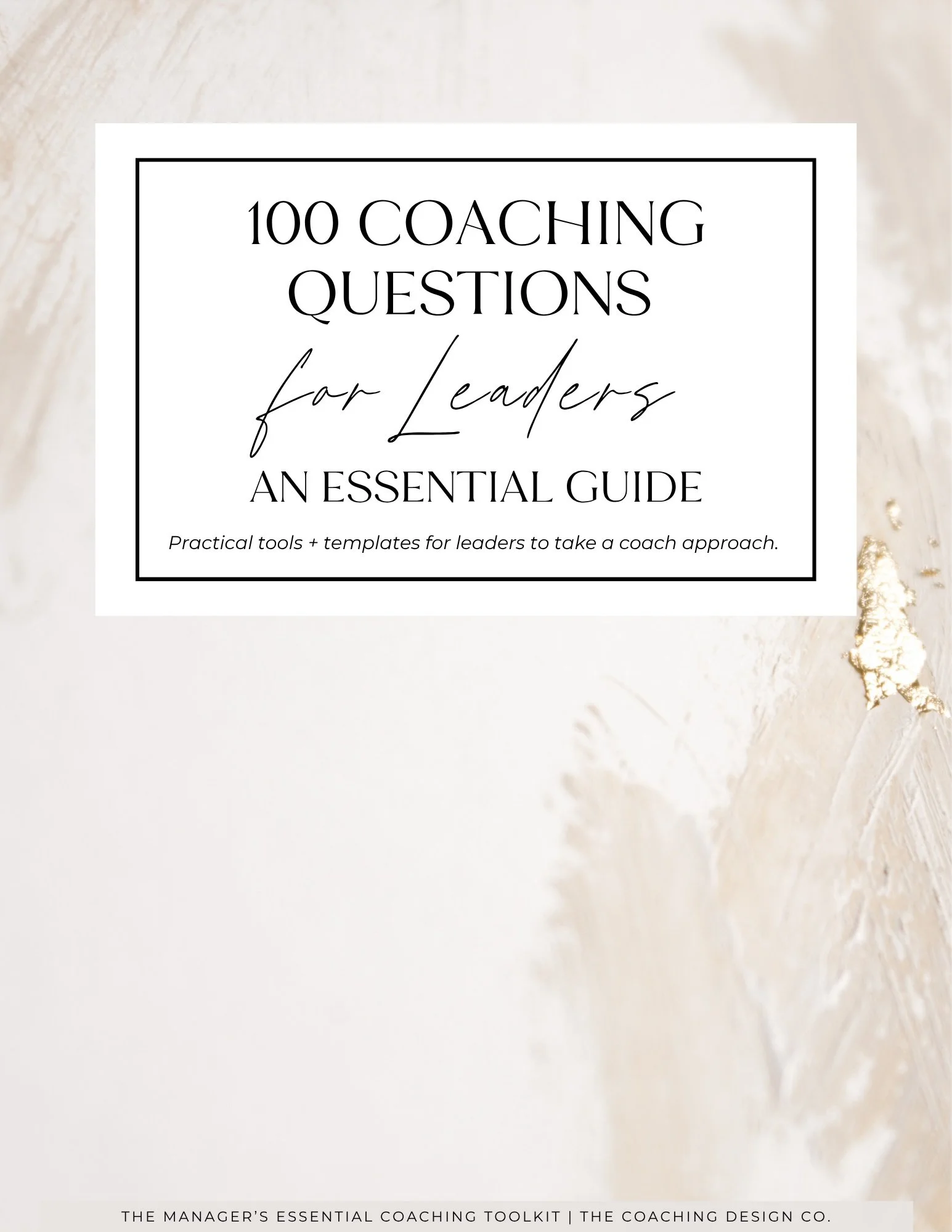
Explore 100 Coaching Questions for Leaders—a complete guide with curated coaching questions organized across ten leadership categories, from self-awareness and decision-making to team building and managing performance. It's the practical companion to embodying a coaching mindset every day.
For Leaders: Why a Coaching Mindset Matters
A coaching mindset is one of the most impactful shifts a leader can make. Rather than defaulting to telling, fixing, or directing, leaders with a coaching mindset create space for their team members to think critically, take ownership, and grow into greater capability. This shift transforms not just individual conversations but the broader culture of a team—building psychological safety, reducing reliance on the leader for every answer, and developing future leaders along the way.
Six Strategies to Cultivate a Coaching Mindset

1. FACILITATE AWARENESS.
Awareness is the greatest agent for change.
-ECKHART TOLLE
Build a strong foundation for coaching yourself and others through deepening your self-awareness as well as encouraging greater awareness in others.
When you have higher self-awareness, you can more readily activate a coaching mindset by:
Staying present and observing patterns
Making habit changes to support growth
Switching perspectives to put yourself in someone else’s shoes
Read more about the benefits of self-awareness and steps to increase your self-awareness.
2. REALIZE THE POTENTIAL.
Our potential lies between what is and what could be.
-KIM BUTLER
Seeing and believing in the potential of yourself and others is fundamental to embracing a coaching mindset. Growth deepens and flourishes with a readiness to recognize and pursue the potential.
Depending on what stage of a growth process you are in, actively developing someone’s potential (or your own) could look like:
Encouraging one’s gifts and talents
Evaluating needs and goals
Exploring possibilities and options
Envisioning a different future
Executing a plan to support growth
3. ACTIVATE YOUR CURIOSITY.
Replace judgment with curiosity.
-LYNN NOTTAGE
Curiosity inspires growth, learning, and discovery — through either self-coaching or when coaching someone else.
Curiosity boosts creative problem-solving and helps us to come up with new and exciting ideas. Curiosity also helps us to be more adaptive and less critical or defensive towards others. When curiosity is high, there is also a greater chance to develop stronger trust and collaboration in our relationships.
Simple ways to nurture your curiosity include:
Admit what you don’t know or aren’t sure about.
Read, watch, and listen to a variety of perspectives.
Learn about the interests of your friends, family, and colleagues.
Check your assumptions regularly, which can limit or inhibit curiosity.
4. MOVE INTO DEEPER LISTENING.
Listen with the will to learn.
-UNARINE RAMARU
Our mindset can make all the difference in how we approach listening.
Although we listen to others every day — in countless interactions — active and deep listening is fairly rare. According to various research studies, most people overestimate their listening skills, and in any given conversation, many of us are likely to be distracted, make assumptions, or focus on the next thing to say.
In more active, deep listening, the listener attends not only to what is being said, but also the emotions, the tone, and other nonverbal cues throughout the conversation. This level of listening has many benefits including building trust, reducing tension, and supporting greater productivity.
Devote yourself to mindful, intentional listening by:
Knowing your distractions — and eliminating them.
Preparing yourself to listen well with a few moments of quiet focus before a conversation.
5. EXERCISE QUESTION THINKING.

The best way to solve a problem is to first come up with better questions.
-MARILEE ADAMS
Powerful questions are one of the key indicators of a coaching mindset at work.
Beyond the buzz of daily life, we are constantly asking (and answering) questions on an ongoing basis. The types of questions we ask — to ourselves and to others — are very influential in shaping our values, behaviors, and relationships.
What types of questions do you ask most often? Do your questions demonstrate a fixed or a growth mindset? How do your questions influence you and others?
Open-ended questions that begin with what or how help us to accelerate learning and growth, and build deeper connections.
6. SHIFT YOUR PERSPECTIVE.
We reinvent ourselves by changing our perspective.
-ROBERT QUINN
Reframing is a powerful strategy that helps us actively practice a coaching mindset. Reframing can be most helpful when you or someone you are coaching feels stuck, overwhelmed, or discouraged. Like shifting the lens on a camera, reframing empowers you to see a different angle or a new perspective on a complex or challenging situation.
Reframing can help you to recognize your biases and assumptions, consider different interpretations, and recognize the opportunities presented by difficulties:
What if there is a different way to look at this?
What would be another way to interpret this?
What is another possible explanation?
What else could be happening here?
A Comprehensive Guide to Becoming a Coaching Leader
Transform Your Leadership Style with 100 Powerful Coaching Questions for Leaders
100 Powerful Coaching Questions for Leaders: Organized into 10 key leadership categories, these coaching questions will help you facilitate insightful conversations, encourage self-reflection, and drive positive change within your team. The categories include:
Self-Awareness: Foster deeper understanding and personal growth.
Productivity: Enhance efficiency and time management.
Decision-Making: Improve judgment and problem-solving skills.
Vision & Strategy: Align individual and team efforts with organizational goals.
Communication & Influence: Strengthen interpersonal skills and impact.
Mentoring & Development: Guide and support the growth of your team members.
Team Building: Cultivate collaboration and high-performing teams.
Managing Stress: Help individuals navigate challenges and maintain well-being.
Change Management: Support team members through transitions and new initiatives.
Managing Performance: Provide constructive feedback and drive improvement.
Essential Coaching Tips and Templates: Learn fundamental coaching skills and immediately implement ready-to-use templates for various coaching conversations.
Coachability Assessment: Understand your team members' readiness for coaching and tailor your approach. This assessment helps you identify where coaching will be most effective.
Goal-Setting Exercise for Leaders: Develop your own coaching goals and create a roadmap for integrating coaching into your leadership style.
10 Inspirational Quote Posters: Stay motivated with these inspirational quote posters designed to support your growth as a coaching leader.
Who is this toolkit for?
New leaders looking to build a strong foundation in leadership coaching skills.
Experienced leaders wanting to enhance their coaching abilities and adopt a more coach-like leadership style.
Managers transitioning into broader leadership roles who need a complete guide to coaching their teams.
HR professionals and leadership development trainers seeking valuable coaching resources for their programs.
Coaches who specialize in leadership coaching.
Anyone who believes in the power of employee development and fostering a growth mindset.
This is a digital download, formatted as a PDF file. No physical item will be shipped to you.
“This is a practical tool for leaders who want to grow in curiosity and connection with their team. The workbook is clear on its purpose, offering both direction on developing a coaching mindset and a practical path for applying coaching questions in leadership—whether in everyday conversations or specific situations. The 100 questions will fill your coaching toolbox, and the reflection work creates space to lead your team with authentic invitations to grow together. Best of all, it doesn't feel like one more thing on a full leadership plate—it feels like a tool that makes leadership easier.” — Tonia M., Program Manager
Cultivating a coaching mindset is a fundamental shift that empowers leaders to develop their teams and foster a culture of growth. But translating this understanding into consistent action requires practical guidance.
Many leaders find themselves wondering how to initiate coaching conversations, navigate performance challenges through a coaching lens, or identify the questions that will truly spark insight and engagement within their teams. To directly address these practical needs, I created 100 Coaching Questions for Leaders: A Complete Guide.
This resource is designed as a complete guide to not only deepen your understanding of coaching principles but also to give you immediately applicable tools. Inside, you'll find:
Practical templates to structure your coaching conversations
A coachability assessment to tailor your approach
100 targeted coaching questions organized across ten essential leadership categories
Reflection prompts to help you embody a coaching mindset day-to-day
Consider this guide your practical companion for confidently leading impactful coaching conversations that drive real results—for both yourself and your team. For practical ways to apply your coaching mindset, explore tips to take a coach approach with your team.