From Chaos to Cohesion: How the 6 Types of Working Genius Can Transform Your Team
Last updated January 18, 2026

Coming together is a beginning. Keeping together is progress. Working together is success.
— Henry Ford
The 6 Types of Working Genius
Taking the Working Genius assessment builds self-awareness, but its real power lies in team cohesion. This post includes an overview of the Working Genius philosophy, helpful tips about the six genius types on a team, and a free download of Working Genius coaching questions.
————————————————————————————————————————————————————————————————

As a leadership coach, I use a variety of assessments for different team development and feel they cover the bases really well. So when I first encountered Patrick Lencioni’s The 6 Types of Working Genius model, I admit I was skeptical. I felt it would be challenging to compete with the many other well-established assessments and bring some truly unique value to team development.
However, after exploring Lencioni’s framework in greater depth and becoming a certified Working Genius coach, I’m happy to report that I am finding this tool to be incredibly insightful.
The Working Genius assessment and the model is now one of my top recommended team development tools.
If you lead a team or are a team member, you are all-too-aware of the ever-evolving challenges that can hinder team effectiveness and productivity. One common pain point that teams across industries experience is the difficulty of leveraging the diverse skills and perspectives of each contributor. Any degree of team disintegration can lead to low morale, lack of creativity, analysis paralysis, and impaired problem-solving, among other frustrations.
Taking the Working Genius assessment is just the beginning. The real transformation happens when your team comes together to interpret the results, identify patterns, and apply those insights to real projects, communication, delegation, and role alignment.
As a certified Working Genius facilitator and consultant, I help organizations move beyond individual reports to create meaningful, lasting changes in how teams collaborate.
One key feature that sets The Working Genius model apart is its focus on how teams can achieve greater results with more strategic collaboration centered around specific areas of work they find most energizing.
Developed by Patrick Lencioni and his team in 2022, this model identifies six types of working genius that individuals exhibit, each contributing uniquely to the team processes of ideation, activation, and implementation. The model encourages us to consider how working genius types can be leveraged to create a more innovative, effective, and efficient workflow.
One important note: it’s tempting to think that your Geniuses are synonymous with your strengths. However, the assessment is actually evaluating which areas of work you find the most energy in.
Although you may be highly skilled in both your Genius and Competencies, the purpose of the assessment is to reveal where you are most energized (your top two Genius Types).
The Working Genius model offers us practical insight into how to keep momentum flowing and achieve optimal results through three critical phases of teamwork:
ideation
activation
implementation
If you are a team leader or you supervise (or coach) team leaders, I recommend to check out the Working Genius as a dynamic approach to building a healthy, thriving team. In this post, I’m going to describe each genius and explore how teams can practically apply this tool to enhance teamwork and productivity.
And if you’re thinking, “This sounds great, but how do I actually use this with my team?” I’ve put together a Working Genius toolkit to help you walk through it step by step.
Download 40 Coaching Questions to use with the Working Genius
When you subscribe to my newsletter The Coaching Mindset, you will receive a free pdf of 40 coaching questions to use with the Six Types of Working Genius model.
Understanding Your Working Genius Assessment

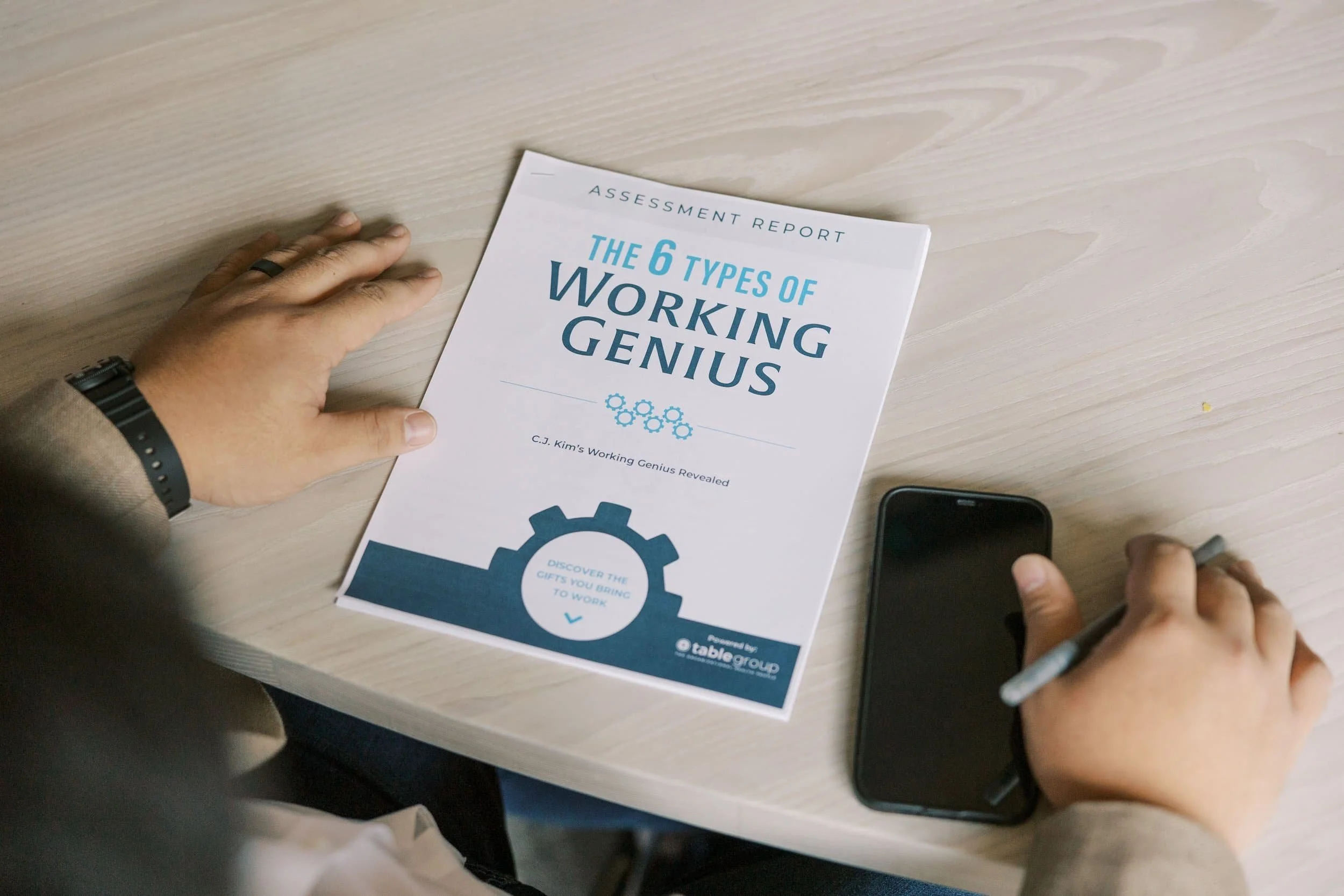
To find out your genius take the assessment at WorkingGenius.com. There are 42 questions, and it takes about ten minutes to complete.
After taking the assessment, you will find that your six geniuses are categorized in three ways:
Working Genius: These are your two strongest geniuses — what you’re naturally good at and what energizes you.
Working Competency: This represents the two areas you can handle effectively but you don’t particularly excel at or enjoy. The competencies sit in the middle ground between your working genius and your working frustration.
Working Frustration: These two areas are the types of work you find frustrating or draining. They tend to sap your enthusiasm and energy.
The Six Genius Types
When teams understand and value all six types of Working Genius, they reduce friction, improve collaboration, and create stronger alignment around shared goals. Each genius plays a critical role, and when even one is missing, teams often feel stuck, misaligned, or fatigued.

The Genius of Wonder (W)
What it is: The Genius of Wonder is all about questioning the status quo and envisioning new possibilities. Individuals with this genius are energized by identifying problems and opportunities that others might overlook. They are naturally curious and enjoy exploring what could be, often driving innovation and creativity.
When it’s Missing:
Teams without Wonder often overlook problems or opportunities and may rush into solutions without considering what could be improved. This can result in repeated mistakes and missed innovation.
How Leaders Can Support the Genius of Wonder:
Maximize the Genius of Wonder by creating intentional spaces for questioning, exploration, and curiosity early in projects. Encourage these team members to voice concerns, identify potential gaps, and propose alternative approaches.
Coaching Question to Ask Wonder Genius Types:
What critical question are we overlooking that could improve our project outcomes?
The Genius of Invention (I)
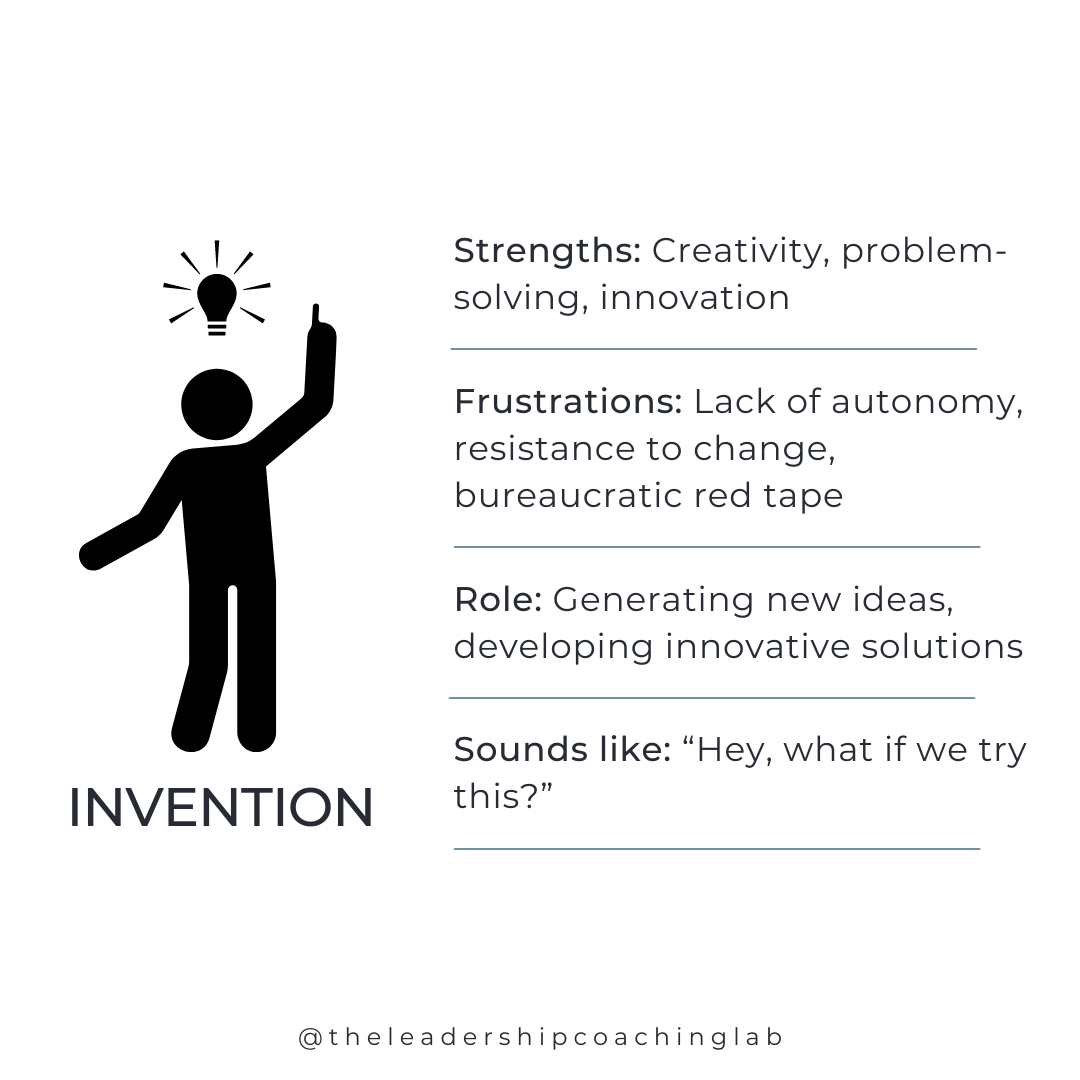
What it is: The Genius of Invention involves generating creative solutions and novel approaches to challenges. Those with this genius enjoy being imaginative and resourceful, and are likely looking for inventive ways to solve problems and improve processes.
When it’s Missing:
Teams without Invention can feel stuck in conventional thinking and struggle to generate creative solutions. They may execute effectively but miss opportunities for innovative breakthroughs.
How Leaders Can Support the Genius of Invention:
Support Inventors by giving them space to brainstorm, generate new concepts, and explore creative solutions. Encourage their contributions during problem-solving sessions and value diverse perspectives, which can spark innovation and novel approaches.
Coaching Question to Ask Invention Genius Types:
What new idea or approach could we explore that might change the way we tackle this challenge?
The Genius of Discernment (D)
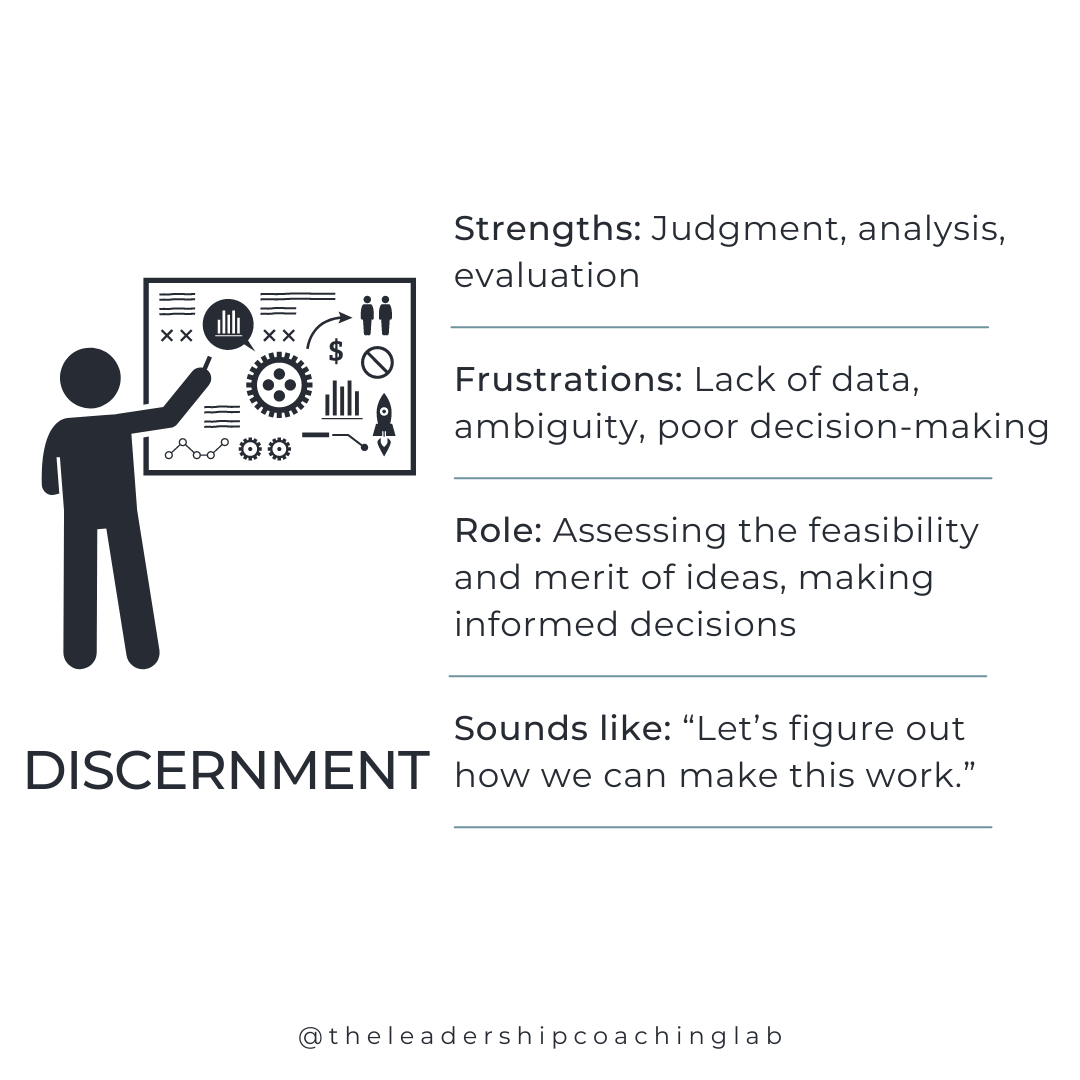
What it Is: The Genius of Discernment involves evaluating ideas and solutions with a keen sense of judgment. Those with this genius find it rewarding to assess the viability and quality of concepts and often make thoughtful decisions based on their intuition and experience.
When it’s Missing:
Teams without Discernment may make decisions without evaluating potential risks or nuances. This can lead to missteps or wasted effort on ideas that aren’t viable.
How Leaders Can Support the Genius of Discernment:
Invite input from team members with Discernment when evaluating options and making strategic decisions. Encourage them to share instincts and insights, especially in ambiguous situations. Their ability to assess ideas quickly can help teams avoid pitfalls and streamline decision-making.
Coaching Question to Ask Discernment Genius Types:
Which option feels right to you, and why?
The Genius of Galvanizing(G)
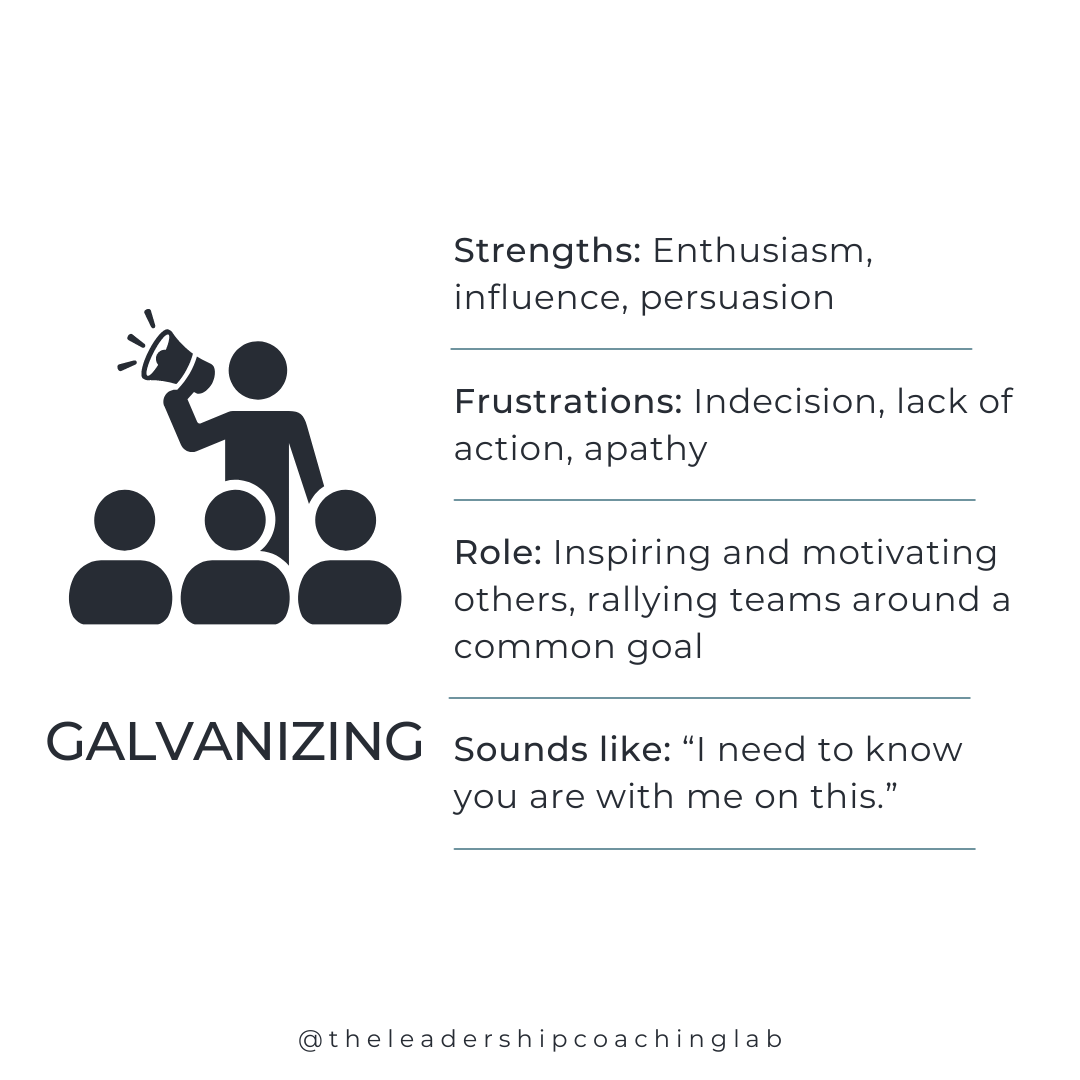
What it Is: The Genius of Galvanizing is about energizing and motivating others to take action. People with this genius are natural leaders who can rally a team around a shared vision and inspire them to pursue goals with enthusiasm and determination.
When it’s Missing:
Teams without Galvanizing often struggle to gain momentum and may lack motivation to move projects forward. Initiatives can stall even when the ideas and plans are solid.
How Leaders Can Support the Genius of Galvanizing:
Empower Galvanizers to rally the team, motivate action, and maintain momentum. Provide opportunities for them to champion initiatives, facilitate collaboration, and keep energy high during challenging projects. Align their responsibilities with team engagement and communication.
Coaching Question to Ask Galvanizing Genius Types:
Who do we need to motivate in order to gain more momentum?
The Genius of Enablement (E)

What it Is: The Genius of Enablement involves helping others succeed by providing support and encouragement. Those with this genius gain energy from creating an environment where team members feel empowered and motivated to contribute their best work.
When it’s Missing:
Teams without Enablement may fail to provide enough support for others, leaving ideas unexecuted or individuals feeling unsupported. Collaboration and follow-through can suffer.
How Leaders Can Support the Genius of Enablement:
Lean into the Genius of Enablement by assigning tasks where support, encouragement, and collaboration are key. Recognize their contributions in helping others succeed and create clear ways for them to assist without becoming overextended.
Coaching Question to Ask Enablement Genius Types:
How can you best support a teammate to help them succeed in this project?
The Genius of Tenacity (T)

What it Is: The Genius of Tenacity is focused on executing and finishing tasks with a high level of efficiency and attention to detail. Individuals with this genius enjoy bringing projects to a successful conclusion, ensuring that all elements are addressed and nothing is left incomplete.
When it’s Missing:
Teams without Tenacity may struggle to complete projects or meet goals, leaving plans half-done. Follow-through suffers and momentum can stall
How Leaders Can Support the Genius of Tenacity:
Leverage the genius of Tenacity by assigning responsibilities where persistence, accountability, and completion are critical. Acknowledge milestones and encourage focus on achieving results, while helping them prioritize so energy is used efficiently across team objectives.
Coaching Question to Ask Tenacity Genius Types:
Where can you apply your focus and follow-through to ensure this project doesn’t lose momentum?
Reading through all six types is useful. Watching your team figure out which ones are missing, and why projects keep stalling in the same place, is where the real shift happens. That's exactly what a facilitated Working Genius session is built to surface.
Looking for a ready-to-use toolkit to facilitate the Working Genius with your team?
The Working Genius Leadership Guide & Team Toolkit includes 60 pages of structured coaching questions, facilitation guides, team mapping exercises, and workflow templates — everything you need to move from assessment results to real application.
Balancing Innovation and Implementation

Teams often struggle to balance innovation and implementation because they prioritize one over the other. This can lead to a lack of creativity or an inability to execute on ideas. Additionally, teams may have difficulty communicating and collaborating effectively, which can hinder their ability to work together towards a common goal.
One of the exciting contributions of Working Genius is that it helps teams integrate each person’s area of strength so that all teamwork phases, from idea generation to evaluation to execution, are optimized for the task at hand.
Let’s take a look at some of the distinctive balancing features of The Working Genius tool. The six geniuses are categorized into two broad groups based on their nature of contribution to teamwork and problem-solving: responsive and disruptive.
Individuals who excel in the Responsive Geniuses (Wonder, Discernment, & Enablement) most often respond to the environment and external stimuli. They thrive when they can react to the ideas, needs, or situations presented to them.
Individuals who excel in the Disruptive Geniuses (Invention, Galvanizing, & Tenacity) are instrumental in initiating change and driving innovation. They enjoy challenging the norm and pushing boundaries to create new possibilities.
For a team to function optimally, a balance between responsive and disruptive geniuses is critical.
For example:
Wonder (responsive) is complemented by Invention (disruptive) to create tangible ideas to solve the problems identified. When left to its own devices, Wonder alone may divulge in excessive curiosity or questioning, which can lead to irrelevant tangents or a state of indecision.
Invention (disruptive) can benefit from being paired with Discernment (responsive) to ensure that new ideas are viable and aligned with practical considerations. Invention on its own may pursue change for the sake of novelty, without observing the needs represented in the environment, and without considering how feasible an idea is to implement.
This paradigm of responsive—-disruptive geniuses highlights an important teamwork truth: each of us need the strengths of our team members to help us effectively achieve our collaborative goals.
The Working Genius framework gives us a tangible tool to evaluate what we need more or less of in our team dynamics.
For a deeper look at why teams get stuck between ideas and finished results, see The Idea Implementation Gap: Why Teams Get Stuck Between Ideas and Results.
Teamwork Makes the Dreamwork, Working Genius Style
If you’ve taken the assessment and are now trying to implement it, here are my top tips for teams to apply the insights.

Identify areas of team strength: Fill out a Working Genius team map so that everyone can understand each team member’s primary and secondary geniuses.
Enhance communication: Provide time for open communication about each person’s genius and how it contributes to the team’s goals. Understanding and respecting different working styles can improve team dynamics and reduce conflicts.
Understand your team’s trends: Reviewing your completed Working Genius team map should provide greater awareness when the team is missing an area of genius or when there is an excess of genius.
Create intentional partnerships: Encourage collaboration among different types of geniuses. For instance, combining the Genius of Wonder with the Genius of Discernment can lead to innovative yet practical solutions.
If you'd rather skip the trial and error and have someone facilitate this with your team directly, that's exactly what I do as a certified Working Genius facilitator and consultant.

Dr. Bethany Peters is a Professional Certified Coach (PCC) and leadership expert who helps individuals, teams, and organizations grow through leadership coaching, executive development, team facilitation, and evidence-based assessments. Whether she's coaching one-on-one or leading a workshop, Bethany creates practical, engaging experiences that help people communicate better, lead with confidence, and create lasting change.